

When the holidays roll around, everyone wants that show-stopping centerpiece, right? The kind everyone gasps at when you bring it out? I get it! For years, I chased that perfect, golden-crusted, utterly tender roast, just like my mom mastered back when Cookery Command was just her dreaming up flavors from her Ohio kitchen. Well, stop stressing, friends, because I’ve cracked the code. This isn’t just another recipe for a standing rib roast; this is the ultimate foolproof oven method. We’re talking about a juicy, tender rib roast that melts in your mouth every single time. Trust me, you’ve got this!
- Why This Prime Rib Roast Recipe Guarantees a Juicy Tender Roast
- Gathering Ingredients for Your Standing Rib Roast
- Step-by-Step Instructions: How to Cook Prime Rib
- Making Prime Rib with Au Jus from Pan Drippings
- Tips for an Impressive Herb Garlic Rib Roast Presentation
- Storage and Reheating Instructions for Leftover Rib Roast
- Frequently Asked Questions About Your Rib Roast
- Estimated Nutritional Data for This Oven Roasted Beef Roast
- Share Your Perfect Rib Roast Experience
Why This Prime Rib Roast Recipe Guarantees a Juicy Tender Roast
I used to think cooking a big piece of meat like this was pure guesswork, but this high-heat sear followed by a slow finish is the secret sauce! It’s truly a shortcut to foolproof roast cooking. That initial blast of 500 degrees gives you a gorgeous, deeply flavored crust—what everyone loves to see on their holiday plate. Then, dropping the heat low keeps the inside perfectly gentle and guarantees you end up with that dream juicy tender roast everyone talks about.
The Science Behind the Perfect Roast Temperature
I know, I know, temperatures sound fiddly, but seriously, ditch the old time-and-hope method. The only way to guarantee perfection on a roast this important is with a good meat thermometer. We aren’t guessing if it’s rare or medium-rare! In the notes above, you’ll see I tell you exactly when to pull it out—and it’s always 5 degrees *before* the final target temperature. That’s because of carryover cooking; it keeps gently cooking even after it leaves the oven. Trust the thermometer, not the clock, and you’ll nail that internal temperature every single time.
Creating the Ultimate Herb Crusted Roast
Oh, the smell! When you mix up that signature garlic and herb rub, your house is going to smell like Christmas morning started early. This rub is what gives our roast its personality; it’s savory, earthy, and it crisps up beautifully against the beef fat. That crunchy exterior is what makes this an amazing Herb Crusted Roast. Don’t be shy when you massage it in; we want a thick, fragrant layer coating the entire thing before it hits the high heat!
Gathering Ingredients for Your Standing Rib Roast
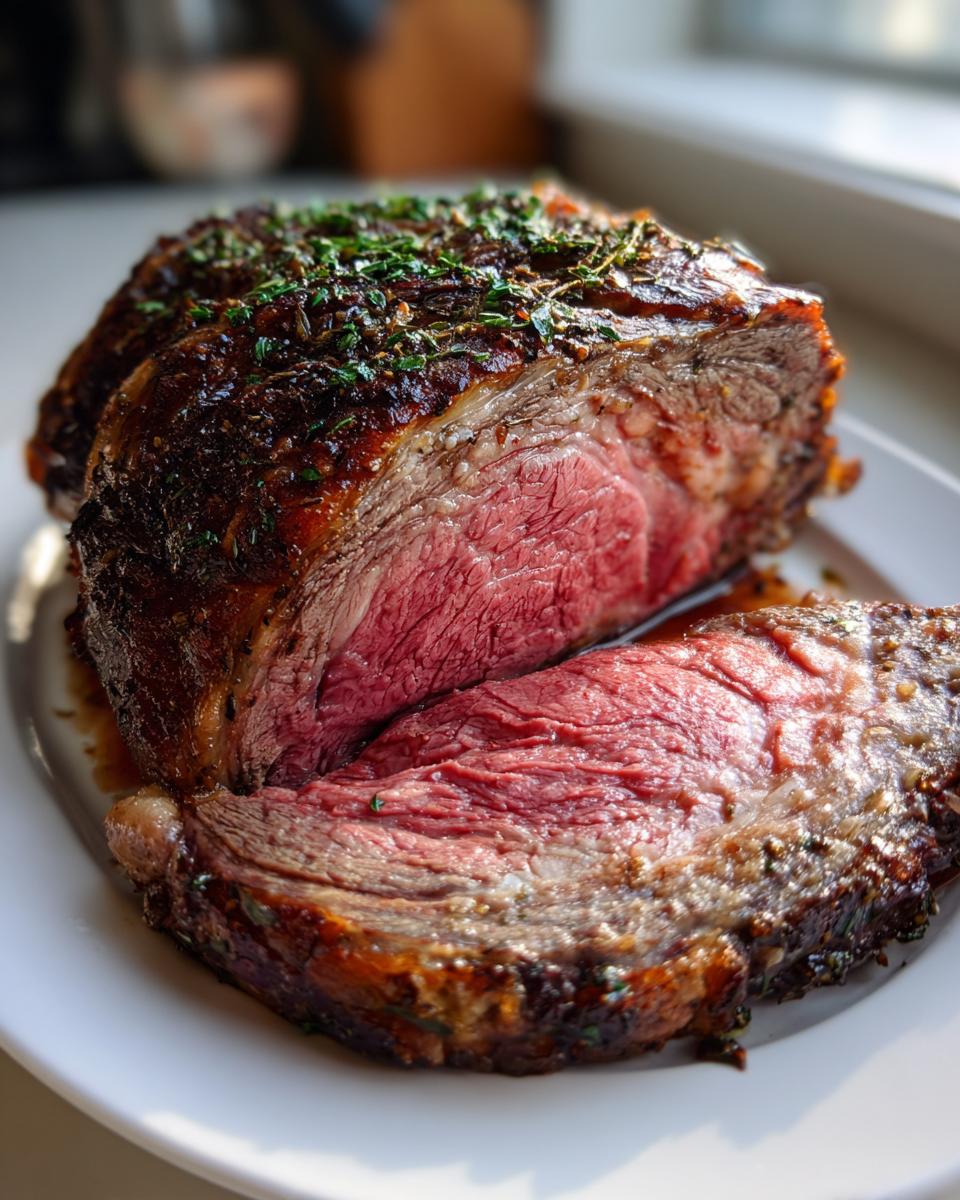
Okay, the excitement is building! But before we can get to that beautiful sear, we need the main event: the meat. Don’t skimp here, folks. Since this roast is the star, its quality sets the entire stage. This recipe calls for a hefty rib roast—we’re talking 5 to 7 pounds so we have enough for leftovers (wink, wink). When you’re at the butcher counter, be specific! We need coarse kosher salt too; table salt just won’t cut it for this kind of beef. Just look at the ingredient list above; there’s nothing fancy here, just pure flavor boosters!
Selecting the Right Rib Roast Cut
This is where some people hesitate, but I always tell them to go for the bones! While a boneless preparation is easier to carve on a random Tuesday, for a centerpiece, you absolutely need a Bone In Prime Rib if you can swing it. Those bones aren’t just for show; they actually act like little insulation shields for the meat closest to them, helping to keep that lower section extra moist and protected during the intense searing phase. Look for good, fine marbling throughout the meat if your butcher lets you peek. That fat melts down and gives you that incredible juiciness we’re aiming for!
Step-by-Step Instructions: How to Cook Prime Rib
Alright, time to put the plan into action! The absolute first thing you HAVE to do—and I mean, don’t even think about skipping it—is get that magnificent roast out of the fridge. It needs to chill out on the counter for a solid two or three hours before anything happens. We need it at room temperature so it cooks evenly all the way through. Seriously, if you skip this step, you end up overcooking the outside trying to warm up the middle. Once it’s tempered, crank that oven up to a blazing 500 degrees Fahrenheit! Then, slap that glorious herb rub all over the entire surface of your beautiful rib roast. Pat it dry first, that helps the crust stick better—I learned that the hard way once!
Mastering the High-Heat Sear on Your Rib Roast
This is the magic moment where we build that gorgeous crust! You keep that oven at 500°F and sear it for exactly 15 minutes for every single pound of meat you have. I know that sounds long, but this initial blast is what gives you that rich, dark exterior. If you have a 6-pound roast, you’re searing for 90 minutes. No peeking! After that searing time flies by, reduce the temperature down to 325 degrees without opening the door—let the oven cool itself down gradually. Trying to rush it ruins the effect, so just trust the process. You want that incredibly flavorful armor protecting the tender meat inside. Someone grab the Christmas centerpiece photos now!
The Essential Resting Period for a Perfect Roast Temperature
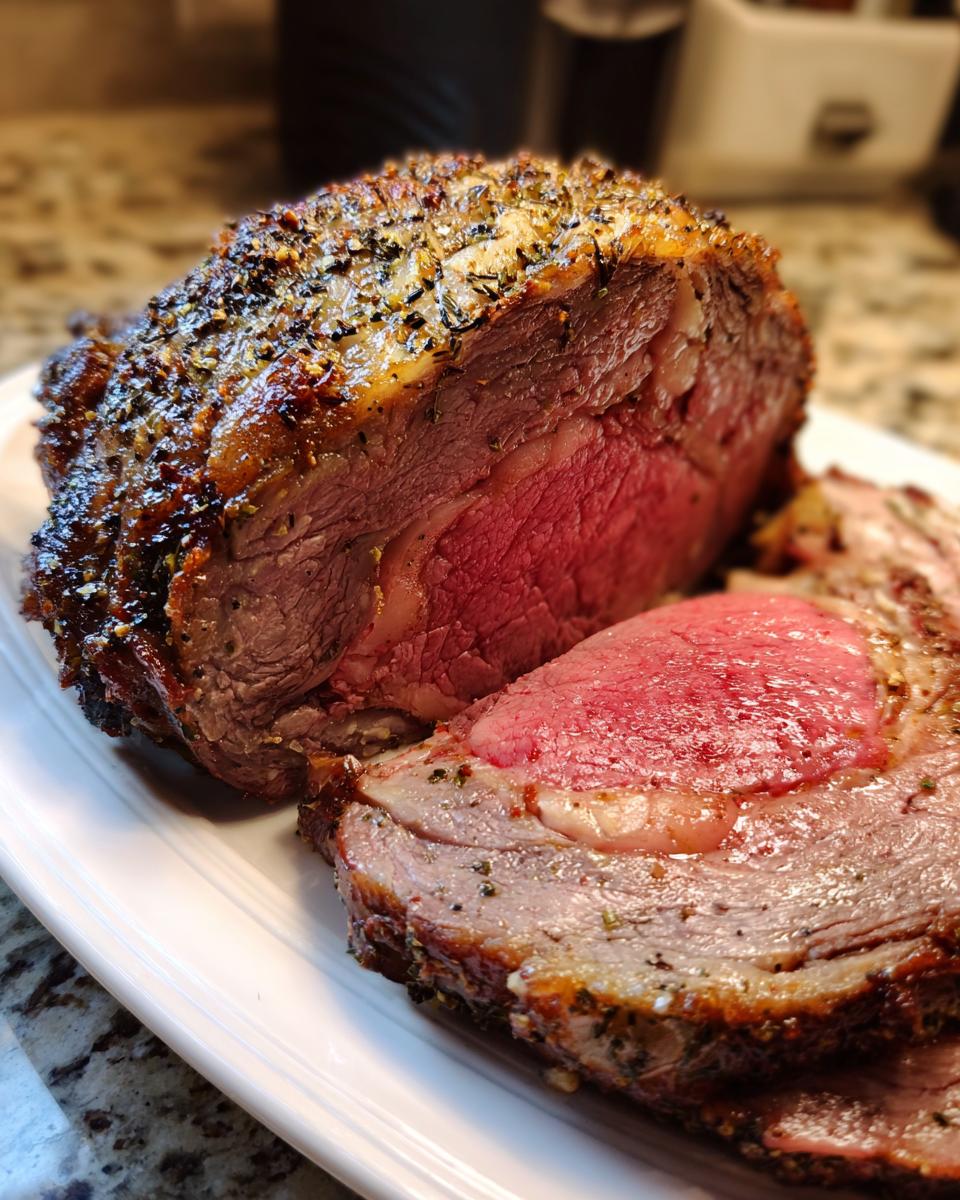
This is the hardest part, but you MUST resist carving immediately! Once your meat thermometer hits the ‘pull’ temperature (remember, 5 degrees below your target rare/medium-rare), yank that roast out. You need to tent it loosely with foil—and I mean *loosely*, you don’t want to steam the crust you just worked so hard on! Let it sit there—at least 20 minutes, maybe 30 if it’s a huge one—to rest. While it’s resting, those interior juices redistribute back into the meat instead of running all over your cutting board when you slice it. This resting time is responsible for that final, perfect roast temperature and those unbelievably tender results! Since we aren’t using any heavy sauces at this stage, if you are serving something creamy, you might want to check out my recipe for creamy garlic aioli later!
Making Prime Rib with Au Jus from Pan Drippings
You’ve rested that glorious beef masterpiece, and now you’ve got a roasting pan full of the most intensely flavored drippings imaginable. Don’t let that gold go to waste! We need to turn that into a quick pan gravy, or proper Prime Rib with Au Jus. This is so much better than anything out of a packet, trust me.
First, you need to carefully set the roasting pan right on the stovetop over medium heat. Be really gentle maneuvering it! Scrape up all those browned, sticky bits stuck to the bottom—that’s pure flavor gold. Then, pour in about two cups of good beef broth. Let that simmer down a bit; it concentrates all the beefy goodness.
When it smells rich and has reduced slightly, take it off the heat. I always run mine through a fine-mesh sieve right into a little gravy boat. Don’t skip the straining step; it keeps your au jus crystal clear and smooth. If you like my sauce recipes, you should check out how I make my creamy Alfredo sauce—it uses the same principle of reducing liquid!
Tips for an Impressive Herb Garlic Rib Roast Presentation
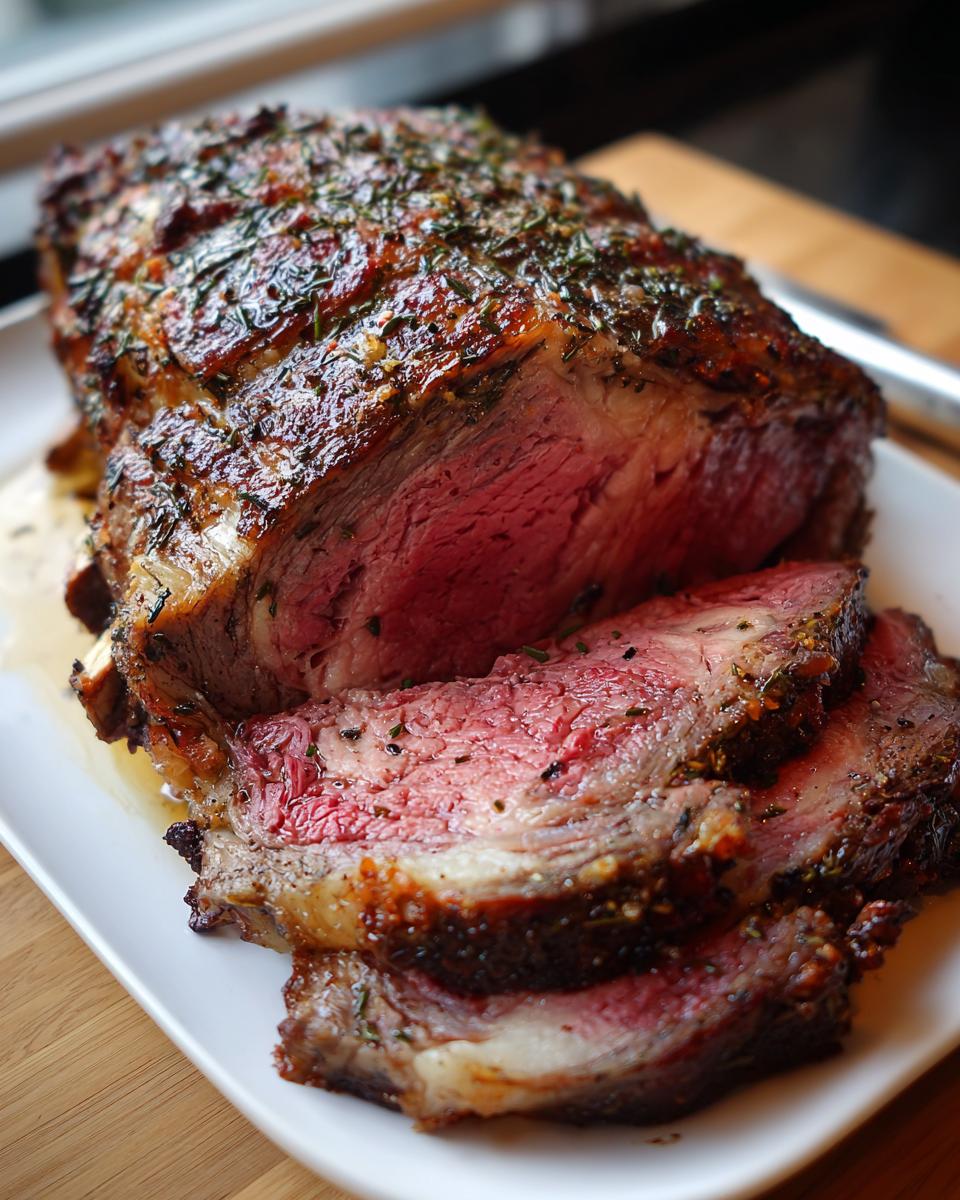
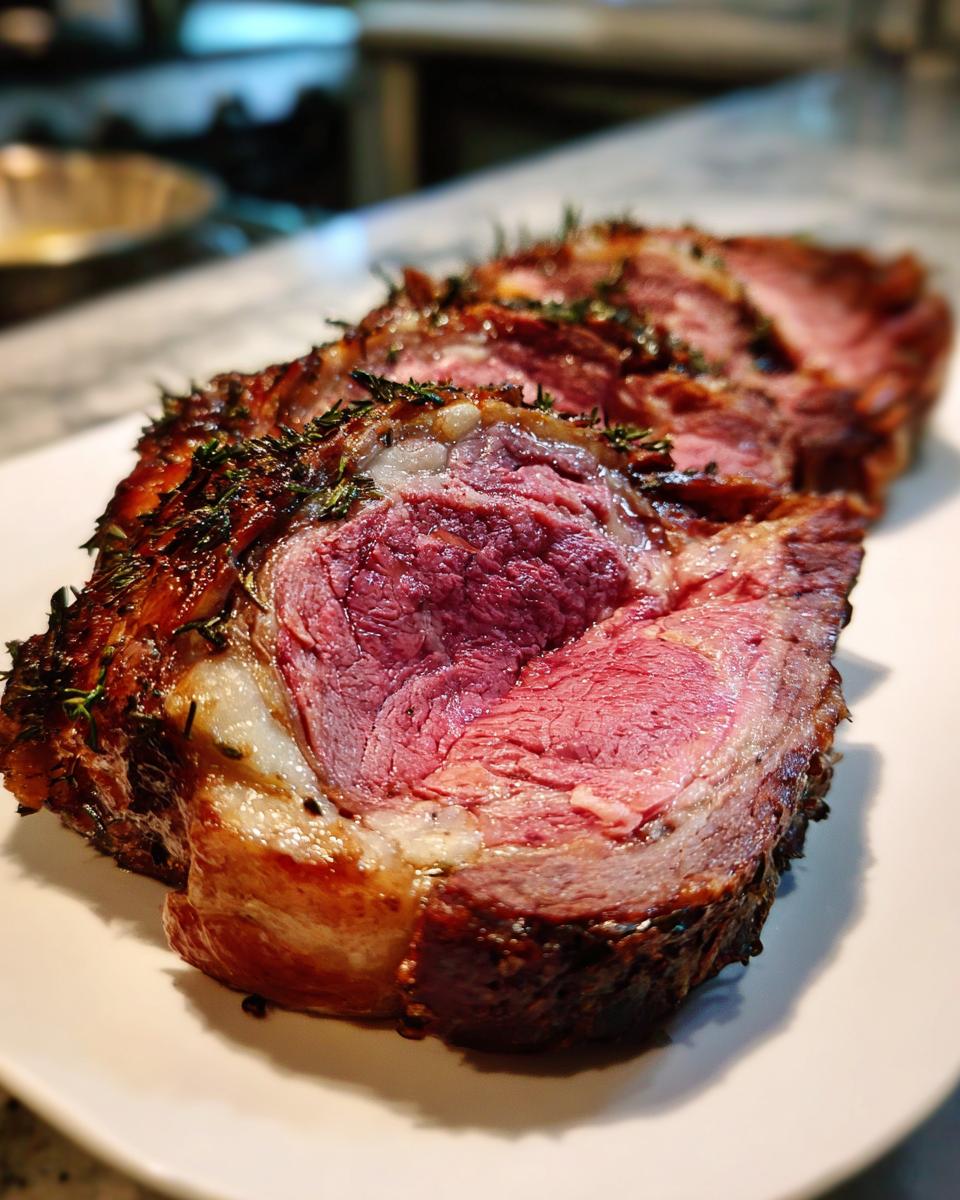
That glorious moment when you slice into the roast! Believe me, I used to be terrified of this part. The first time I carved a roast this big, I think I panicked and sliced straight *with* the grain—it came out looking like shredded beef instead of elegant slices! Never again, folks. The secret to serving the most amazing Garlic Herb Roast is carving against the grain. Take a moment before you slice to look closely at the cooked meat; you’ll see the muscle fibers running in one direction. You want your knife going perpendicular, cutting straight across those lines. This simple trick shortens the fibers, and suddenly, everyone has the most tender, melt-in-your-mouth piece of beef imaginable!
This beautiful, crusted piece of meat deserves to be the star. When I finally mastered carving properly, I felt like I was accepting a culinary award right there in my dining room! It transforms the whole experience when you serve up those perfect, thick slices onto everyone’s plate. It really elevates the whole Meat centerpiece dinner feeling we are aiming for.
Serving Suggestions for Your Meat Centerpiece Dinner
Because this main dish is so rich and savory, you don’t need fussy sides fighting for attention. We want things that complement the beef without overwhelming that lovely herb crust. My first go-to suggestion is always creamy mashed potatoes—they are the perfect vehicle for catching all those delicious pan juices or any extra au jus you poured!
Also, bring in some bright veggies to cut through the richness. We always make a big, simple platter of roasted root vegetables. You can roast carrots and parsnips right alongside your roast during that final resting period, or try my recipe for roasted honey-glazed carrots if you want a touch of sweetness to balance the savory garlic notes from the rub. If you want more inspiration for complementary flavors, check out this great guide on herb garlic prime rib!
Storage and Reheating Instructions for Leftover Rib Roast
Okay, if you somehow manage to have leftovers of this amazing rib roast (which I highly doubt!), storing it right is key to keeping that tenderness for another meal. You want to slice whatever meat is left thinly against the grain. Seriously, slice it thin!
Pop those slices into an airtight container. Here’s the trick for reheating: don’t just microwave it dry! Put the slices in a shallow dish, spoon a little bit of your prepared au jus or some beef broth over them—just enough to barely cover the bottom of the dish. Cover that tightly with foil and warm it gently in a low oven, like 275 degrees, just until it’s warm through. That little bit of steam keeps the leftover meat incredibly moist!
Frequently Asked Questions About Your Rib Roast
I know when you’re reading a big recipe like this, you’re bound to have a few lingering questions. That’s totally normal! The best way to tackle a special occasion meal like this rib roast is to know all the answers ahead of time, so you’re super confident when game day arrives. Here are the things folks ask me most often when they’re planning their first (or tenth!) perfect prime rib.
Can I use the 500-degree method for a smaller rib roast?
Yes, absolutely! This high-heat sear followed by the lower temperature is fantastic for any size roast, even if you’re only doing a tiny two-bone roast. The calculation for the searing time (15 minutes per pound) still applies perfectly to create that crust. But since smaller roasts cook faster, you have to be extra diligent watching your thermometer. Don’t rely on the time alone; pull it out exactly when you hit that target internal temperature, even if it means the searing time was a little shorter than the math suggested.
What is the difference between a ribeye roast and a standing rib roast?
Oh, the naming conventions in the meat world! It can be totally confusing, right? Here’s an easy secret: for all intents and purposes, a ribeye roast and a standing rib roast describe the exact same glorious cut of beef—those beautiful ribs sitting there! Ribeye steaks are cut from this primal section. When you buy the whole section with the bones attached, we usually call it the standing rib, or more formally, Prime Rib. So if you find a trusted recipe for one, you can use it for the other!
Is it better to cook a bone-in or boneless rib roast?
If you ask me, bone-in wins for flavor and presentation, hands down! Those bones act as a natural insulator, helping keep the meat closest to them incredibly juicy, just like we talked about when selecting our ingredients. However, the trade-off is carving. A bone-in prime rib is a little trickier to carve at the table because you have to work around the bones first. If ease of carving is your absolute top priority—maybe you’re rushing a bit—a boneless roast is still going to taste delicious because we’re using our oven method. For next time, you could check out my recipe for French Onion Meatloaf if you need a simpler centerpiece sometime!
If you’ve tried this approach and nailed your holiday dinner, please consider leaving us a 5-star rating! And for more foolproof methods that take the guesswork out, I highly suggest checking out this great tip on a foolproof prime rib recipe, too!
Estimated Nutritional Data for This Oven Roasted Beef Roast
Now, I know what you’re thinking. Centerpiece meals like this stunning rib roast usually mean it’s time to throw the diet out the window, but since we’re making smart choices with our roasting method, the numbers aren’t as scary as you might think! We aren’t loading this up with heavy sauces, remember, we’re keeping that au jus light and natural.
I ran the numbers based on the ingredients and a 6-ounce serving size, which is plenty generous for this rich beef. Always remember that these are just estimates; your actual values change based on how much fat cooks off and how much of that amazing au jus you drizzle on top. If you are looking for more lighter inspiration, my friends over at low-calorie recipe central have some great ideas, like their amazing post on the perfect standing rib roast!
Here is the breakdown:
- Calories: 450
- Fat: 30g (12g saturated, 18g unsaturated) These are healthy fats from the beef!
- Protein: 40g (Yes, a huge helping of muscle-building goodness!)
- Carbohydrates: 1g
- Sugar: 0g
- Sodium: 450mg (This depends heavily on how much salt you use in your rub, so be mindful if you use lighter salt!)
See? A genuinely impressive, delicious, and relatively clean main event for your dinner table. Enjoy that slice!
Share Your Perfect Rib Roast Experience
Whew! You made it! You tackled the big one, the holiday heavyweight champion, and you produced an absolutely stellar rib roast! Now comes the best part: sharing the success. I thrive on hearing how these recipes transform your table, especially when it comes to those huge meals.
Did this stop being a stressful event and finally become your go-to Christmas Dinner Main? Did your family actually inhale the whole thing before you could even think about leftovers? Tell me about it!
I’d be so thrilled if you took a moment to leave a rating right here on the recipe; five stars really helps other folks planning their big dinners see that this method is solid proof. Think of it as paying it forward to the next nervous host!
And please, please send pictures! I love seeing those golden, crusted roasts sitting perfectly carved on your dinner tables. Tag me on social media or shoot me a quick note through the contact page to say hello. I can’t wait to celebrate your success!
PrintThe Ultimate Foolproof Prime Rib Roast Recipe (Oven Method)
Make a tender, juicy standing rib roast with a flavorful herb crust using this simple oven method. This recipe guarantees a perfect result for your holiday centerpiece.
- Prep Time: 20 min
- Cook Time: Variable (approx. 15 min per lb + resting)
- Total Time: 3 hours
- Yield: 6-8 servings 1x
- Category: Dinner
- Method: Oven Roasting
- Cuisine: American
- Diet: Low Calorie
Ingredients
- 1 (5-7 lb) bone-in Prime Rib Roast (Rib Roast)
- 3 tablespoons coarse kosher salt
- 2 tablespoons black pepper
- 1 tablespoon dried thyme
- 1 tablespoon dried rosemary
- 6 cloves garlic, minced
- 1/4 cup olive oil
- 1 tablespoon Dijon mustard
- 1 teaspoon onion powder
- 1 teaspoon garlic powder
Instructions
- Remove the roast from the refrigerator 2 to 3 hours before cooking to allow it to come to room temperature.
- Preheat your oven to 500 degrees Fahrenheit.
- In a small bowl, combine the minced garlic, olive oil, Dijon mustard, onion powder, garlic powder, salt, pepper, thyme, and rosemary to create the herb rub.
- Pat the entire surface of the rib roast dry with paper towels.
- Rub the herb mixture evenly over the entire surface of the roast.
- Place the roast, fat-side up, in a roasting pan fitted with a rack. If using a bone-in roast, ensure the bones are positioned underneath the meat.
- Sear the roast at 500 degrees Fahrenheit for 15 minutes per pound of meat. For a 6 lb roast, sear for 90 minutes.
- After the searing time, reduce the oven temperature to 325 degrees Fahrenheit without opening the oven door.
- Continue roasting until the internal temperature reaches your desired doneness (see temperature guide below). Do not rely on time alone.
- Remove the roast from the oven when it reaches 5 degrees below your target temperature.
- Tent the roast loosely with foil and let it rest for at least 20 minutes before carving. This resting period is crucial for a juicy tender roast.
- To make au jus, place the roasting pan on the stovetop over medium heat. Scrape up any browned bits from the bottom of the pan. Add 2 cups of beef broth and simmer until reduced slightly. Strain before serving.
Notes
- For rare: Remove at 120°F (target internal temperature).
- For medium-rare: Remove at 125°F (target internal temperature). This is the recommended doneness for the best flavor and texture.
- For medium: Remove at 130°F (target internal temperature).
- Use a reliable meat thermometer inserted into the thickest part of the roast, avoiding bone contact, to monitor doneness.
- If you prefer a bone-in prime rib, the bones act as insulation and may require slightly longer cooking time.
Nutrition
- Serving Size: 6 oz cooked
- Calories: 450
- Sugar: 0
- Sodium: 450
- Fat: 30
- Saturated Fat: 12
- Unsaturated Fat: 18
- Trans Fat: 0
- Carbohydrates: 1
- Fiber: 0
- Protein: 40
- Cholesterol: 140