

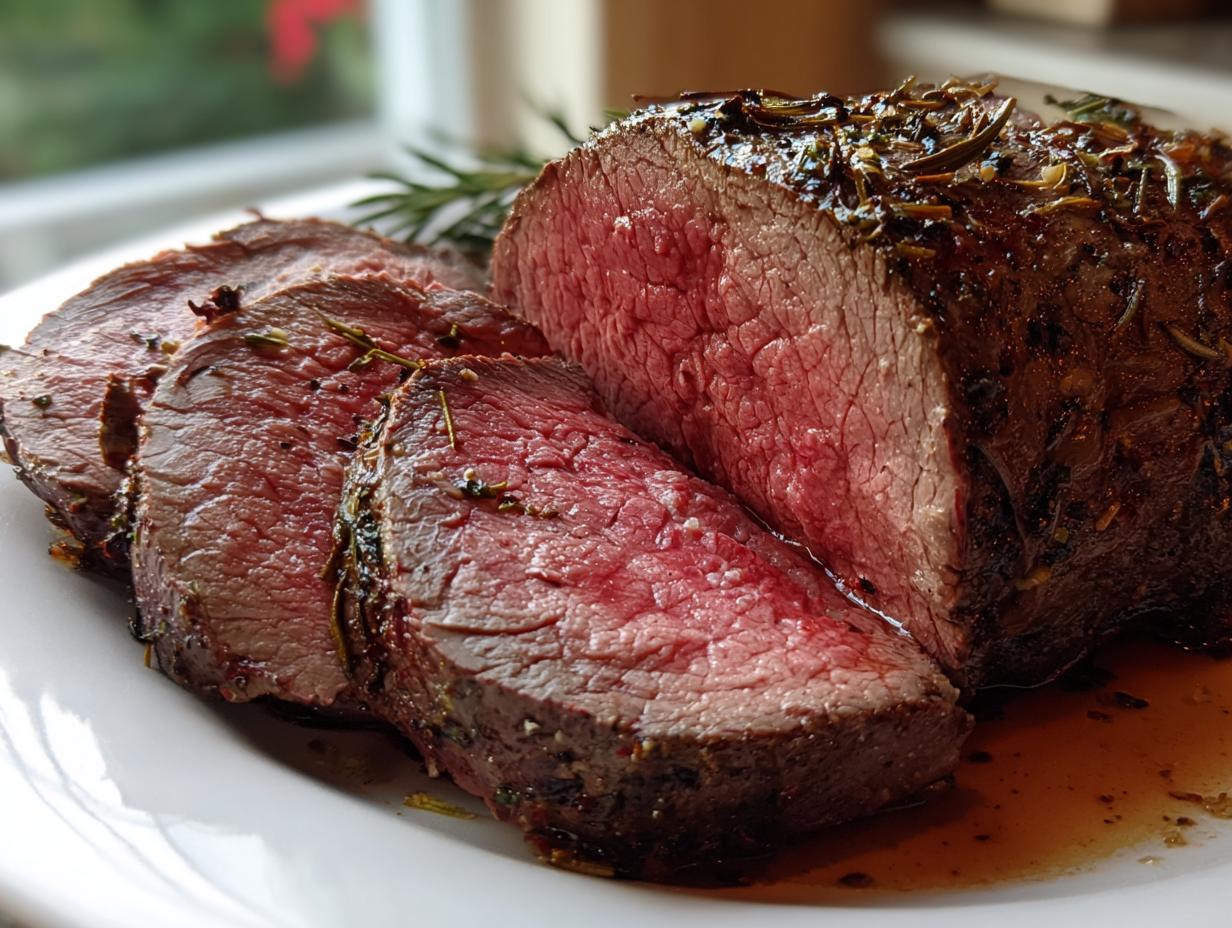
Okay, deep breaths! Hosting Christmas dinner shouldn’t feel like a tightrope walk, but let’s be real, the main event always causes a little panic. You want that ‘wow factor,’ right? You want people raving about how buttery and perfect your roast was, not whispering about dry edges. Trust me, I’ve been there, trying to live up to generations of expectations! That’s why I’m handing over my absolute most dependable recipe for the **beef tenderloin**. This isn’t some fussy restaurant technique; this is solid, kitchen-tested reliability that guarantees you a show-stopping centerpiece without the stress. You can finally relax and enjoy your own party!
- Why This Beef Tenderloin Recipe Guarantees Holiday Success
- Ingredients for the Best Beef Tenderloin Recipe
- Essential Equipment for Roasting Your **Beef Tenderloin**
- Step-by-Step Guide: How to Cook Beef Tenderloin Perfectly
- Expert Tips for a Flawless **Beef Tenderloin** Presentation
- Serving Suggestions for Your **Holiday Party Recipe**
- Storage and Reheating Instructions for Leftover **Beef Tenderloin**
- Frequently Asked Questions About **How to Cook Beef Tenderloin**
- Nutritional Estimates for This Beef Tenderloin Roast
Why This Beef Tenderloin Recipe Guarantees Holiday Success
Listen, the success of this dish isn’t luck; it’s pure kitchen science, which is what we love here at Cookery Command! We take traditional techniques and make sure they absolutely work for you—every single time. This roast is designed to be tender all the way through, not just in the middle. My connections to classic American cooking, honed over years, really show up in these steps. Before you even touch the oven, a couple of critical things need to happen.
- You absolutely must bring that beautiful roast out of the fridge two hours ahead. Letting it come up to room temperature ensures it cooks evenly.
- We use a two-stage temperature roasting method. This gives us the best of both worlds: a gorgeous, flavorful crust and that perfectly pink center.
Mastering the Temperature for Your Beef Tenderloin
That first blast in the hot oven—425 degrees, remember?—is purely for building crust and making everything smell incredible. Think of it as setting the stage! But we don’t stay there too long, or the outside will burn before the middle is cooked. So, we drop the temp way down to 350 degrees.
This slower, gentle heat allows the inside to cook evenly. You are aiming for 130 degrees Fahrenheit on your meat thermometer for true medium-rare perfection. Don’t get scared when the time estimate seems a little loose; the thermometer is your trustworthy guide, just like we preach over on our story page. That temperature gives you that amazing, buttery texture!
Ingredients for the Best Beef Tenderloin Recipe
When you’re cooking something this special, you can’t cut corners on the building blocks. I always lay out my ingredients first because it helps me visualize the process, which keeps me way calmer when the guests start showing up! This list is short, but every single item plays a specific, important role in getting that incredible flavor and texture.
- 3 lb beef tenderloin roast, completely trimmed of silver skin and excess fat
- 2 tablespoons olive oil (use a good quality one, it really matters here!)
- 2 teaspoons kosher salt (don’t skimp on the salt, we need that crust!)
- 1 teaspoon black pepper, freshly ground if you can manage it
- 1 teaspoon dried thyme
- 1 teaspoon dried rosemary
- 4 cloves garlic, minced finely—I mean, really mince up those little guys!
That’s it! See how simple that is? We’re letting the quality of the beef and the fresh flavor of the herbs do all the heavy lifting. No weird, complicated marinades here, just pure, straightforward flavor that shines through after resting.
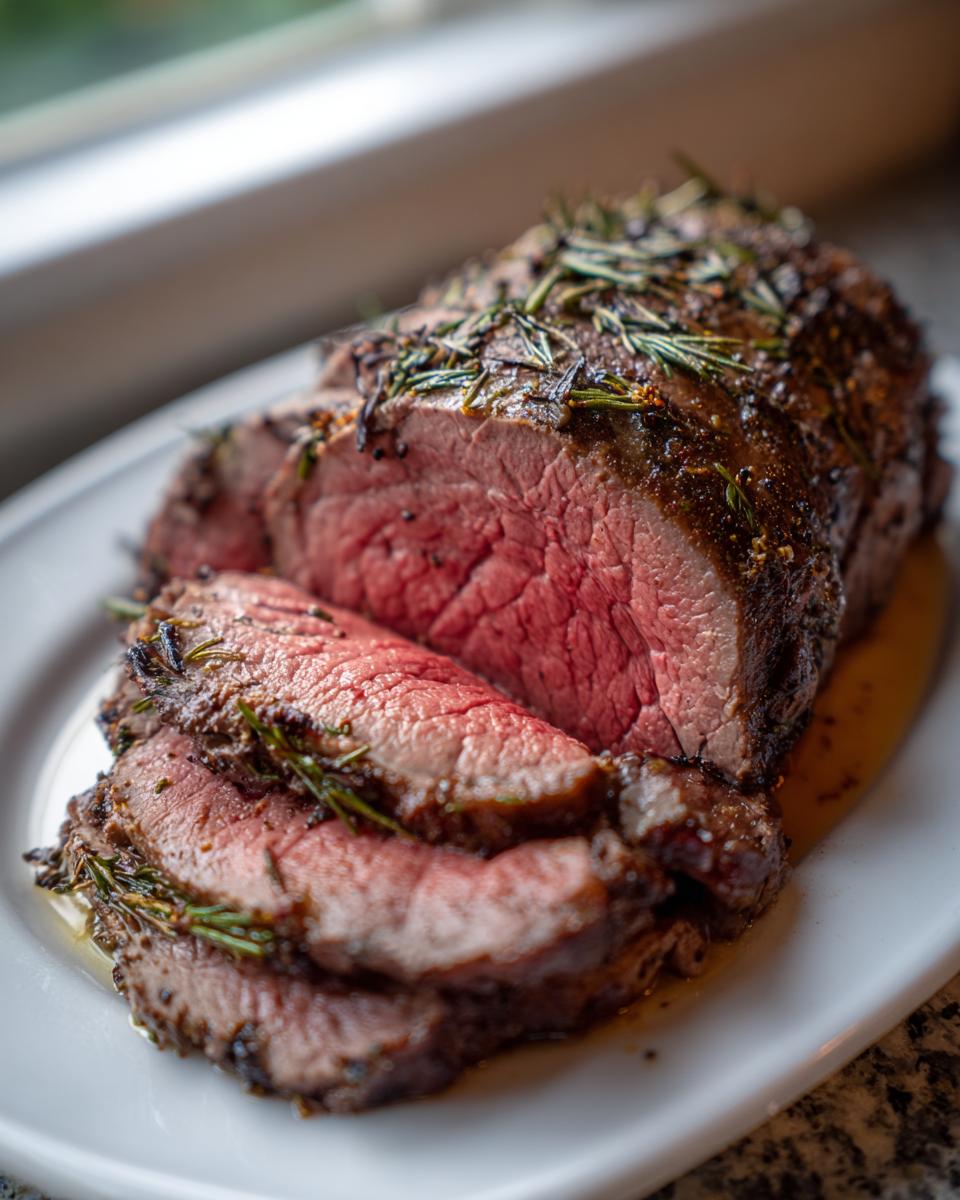
Essential Equipment for Roasting Your **Beef Tenderloin**
You know, the real difference between a good roast and a spectacular one often comes down to having the right tools ready to go. I always set my gear out right after I pull the beef from the fridge to come to room temp. It keeps me organized so I don’t realize halfway through seasoning that I forgot the most important thing!
For this **beef tenderloin** recipe, you really only need three non-negotiable items:
- A sturdy roasting pan—nothing fancy necessary, just something to catch the drips!
- A wire rack that fits inside that pan. We need that air circulation underneath, or you end up steaming the bottom of your roast, and nobody wants that!
- And please, please, please, an instant-read meat thermometer. This is the secret weapon for foolproof cooking, especially for a **holiday party recipe** where you can’t afford a cooking mistake. Trust me, guessing just isn’t worth it here.
Step-by-Step Guide: How to Cook Beef Tenderloin Perfectly
Alright, this is where the magic really happens! Getting a massive roast cooked perfectly feels intimidating, I know, but if you follow these steps exactly, your **beef tenderloin** is going to be legendary. Remember that two-hour rest we talked about? Do not skip it! The beef needs to get friendly with room temperature before it sees the heat.
Once your oven is humming along at 425 degrees, grab that herb mix you prepared earlier. We’re moving fast here. First, you coat the entire roast evenly with the olive oil. Think of the oil as the glue for all the delicious spices we’re about to add. Then, take that glorious blend of salt, pepper, thyme, rosemary, and garlic, and rub it all over. I mean *everywhere*. You want that crust to be evenly seasoned when it comes out. Get it settled fat-side up on that wire rack in your roasting pan, and let’s get it in there!
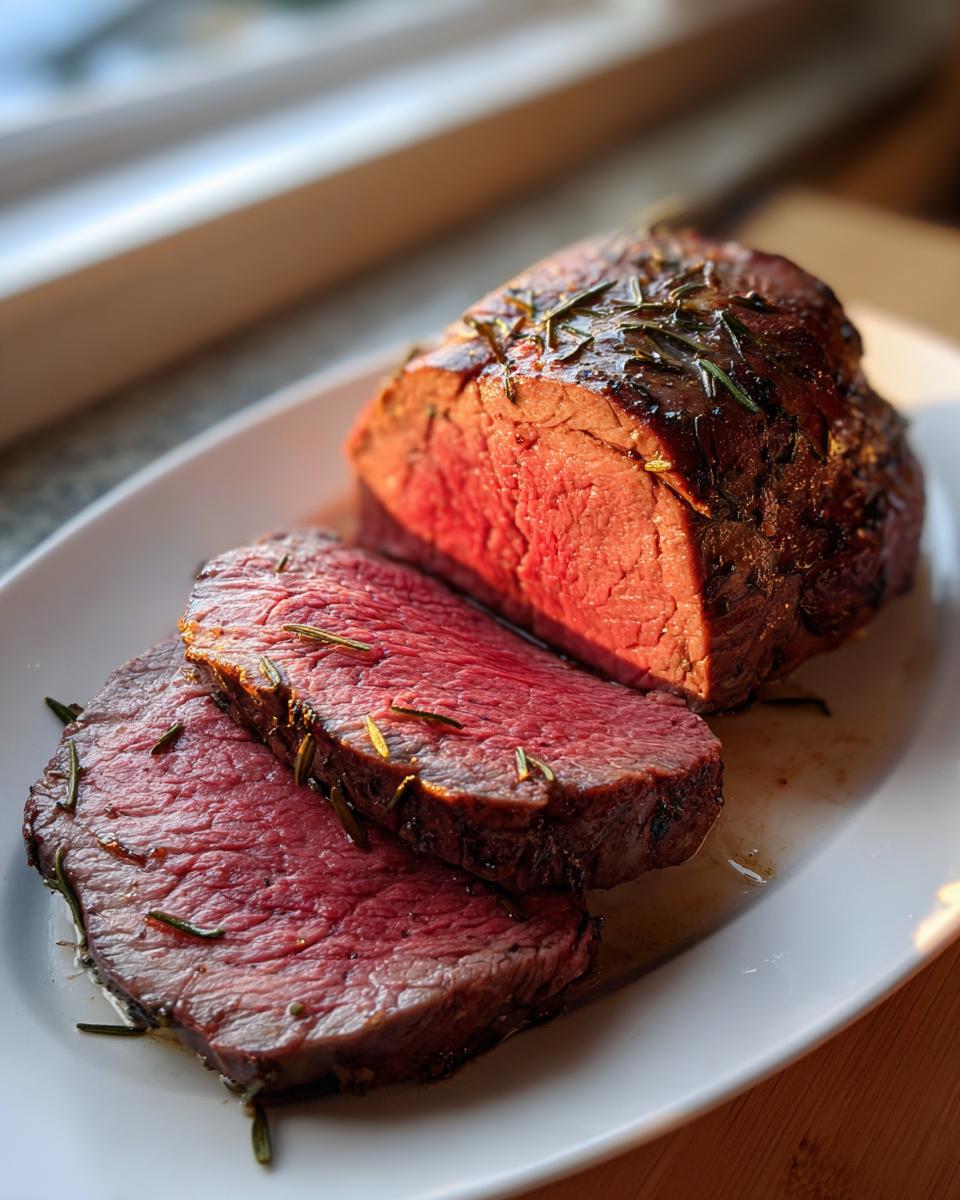
Prepping and Seasoning the **Beef Tenderloin**
The prep sounds simple, but paying attention to the details here pays off huge later. When you mix up your salt, pepper, thyme, rosemary and garlic, if you have fresh rosemary or thyme, swap it in—the aromatic difference is unbelievable! Make sure that garlic is truly minced, almost paste-like, so it toasts nicely instead of burning.
Once the oil is on, sprinkle that rub liberally. Don’t baby it! Use your hands and press that seasoning firmly so it adheres right to the surface of the **beef tenderloin**. You want every slice to have that herby, garlicky goodness wrapping around it. We are setting up for maximum flavor development right now, so treat that rub like it’s gold dust!
Roasting Schedule for Tender **Beef Tenderloin**
This two-temperature dance is the key to avoiding that dreaded grey band around the outside of your roast. Pop the tenderloin in the 425°F oven first. Let it go hard for 15 minutes. This sets the exterior and smells amazing, by the way!
Right after those 15 minutes, you must—and I mean *must*—reduce the heat down to 350°F. Now, slow down and be patient. This is where you insert your instant-read thermometer into the very thickest part of the roast. Ignore the clock and watch the thermometer! When you hit 130°F for medium-rare, pull it out immediately. Cooking by time when roasting a big cut like this is a recipe for disaster. Thermometer wins, always!
Finally, once it’s out, tent it loosely with foil. Seriously, 15 minutes of resting is non-negotiable! That resting time allows the juices to redistribute, ensuring maximum tenderness when you finally slice into your spectacular **beef tenderloin**.
Expert Tips for a Flawless **Beef Tenderloin** Presentation
So, you’ve managed the cooking like a pro and you let it rest—fantastic! Now we talk about presentation, because how you slice this gorgeous roast can honestly make or break how tender it tastes. If you happen to want that extra, deep crust we mentioned in the notes, now is the time to think about it. If your oven-safe skillet was hot, you can sear that tenderloin on all sides *before* putting it into the oven. It adds serious flavor!
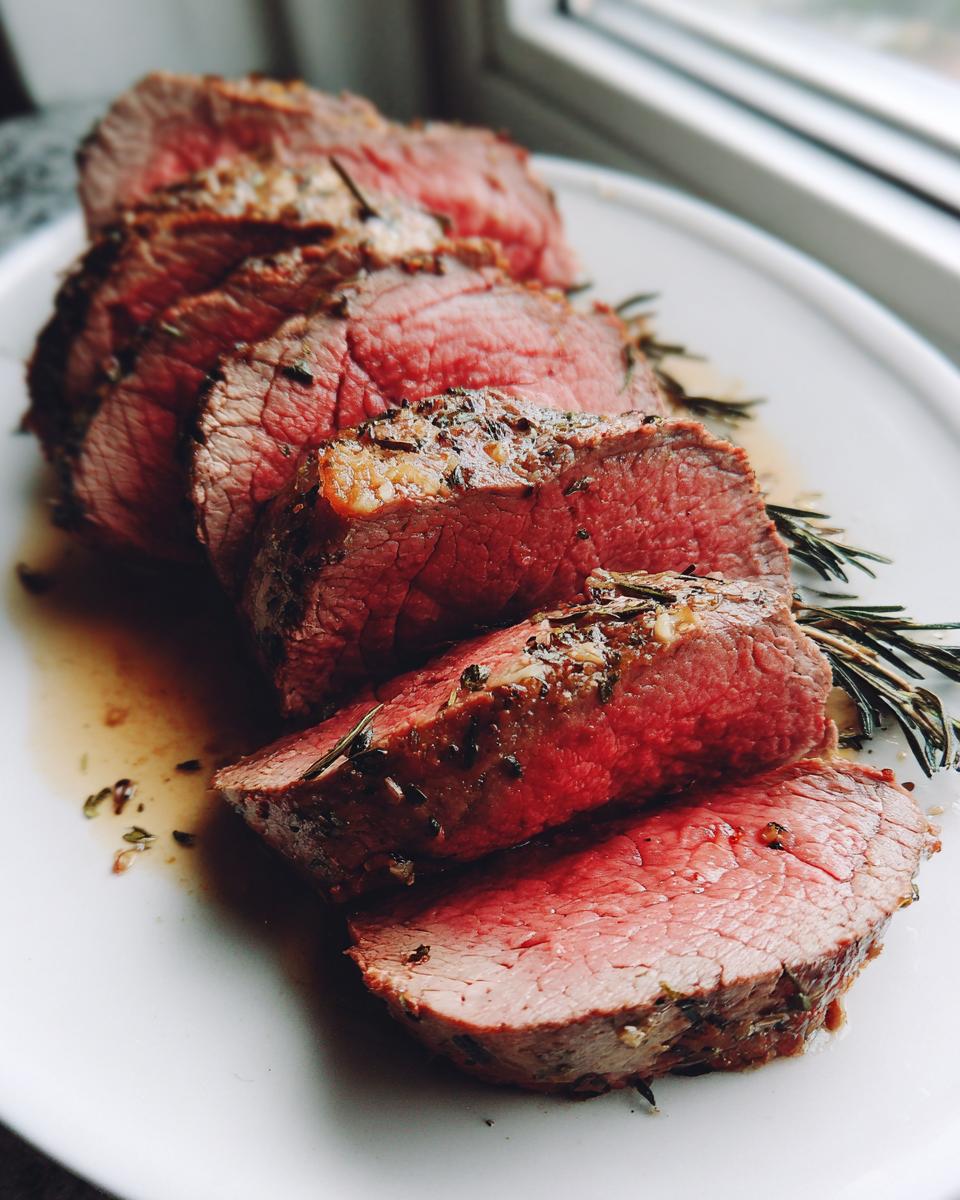
But the most important thing when serving this **beef tenderloin** is your cutting technique. You have to slice against the grain. Look closely at the meat when you start; you’ll see the muscle fibers running one way. Slice perpendicular to those lines!
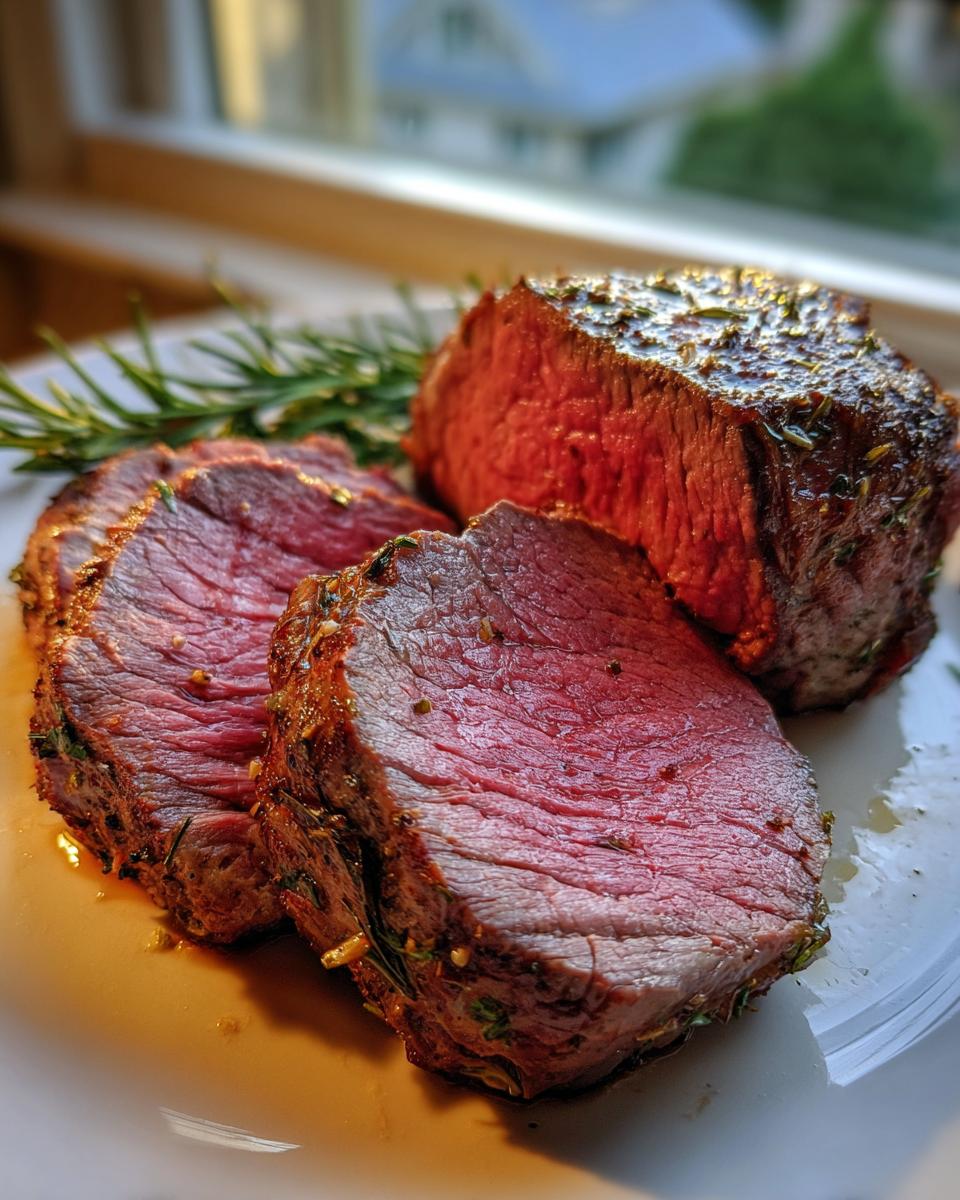
Slicing against the grain shortens those tough fibers, making every single bite melt in your mouth. Aim for nice, even 1-inch slices, and watch your guests swoon over how tender your **holiday party recipe** turned out!
Serving Suggestions for Your **Holiday Party Recipe**
Now that you’ve mastered the centerpiece, what goes next on the table? We don’t want fussy side dishes stealing the show from this magnificent **beef tenderloin**. Keep it elegant, keep it classic, and keep things manageable so you’re not stuck slaving over the stove while everyone else is enjoying themselves!
For me, nothing beats creamy mashed potatoes—I swirl a little roasted garlic into mine for extra depth. Then, you need something bright and green. Roasted asparagus spears tossed simply with olive oil, salt, and a tiny squeeze of lemon juice after they come out of the oven are perfect.
Another wonderful option is a dish of roasted root vegetables. It just screams elegant **holiday party recipe**, and everything roasts beautifully right alongside your tenderloin (just manage the temperatures!). These sides support the beef perfectly without creating any extra stress for you!
Storage and Reheating Instructions for Leftover **Beef Tenderloin**
I like to think that having leftovers of the **best beef tenderloin recipe** means I’ve won the holiday lottery! But if you don’t treat those precious slices right, they can dry out faster than you can say “next year’s menu.”
The key to keeping this roast good is minimizing air exposure. Store any extra slices in a really good, tight, airtight container in the fridge. Don’t wrap them loosely in foil—they need that seal. They should be great for about three or four days this way.
When you’re ready to reheat, slow and low is the mantra! Never, ever zap a slice in the microwave alone; that will ruin the beautiful texture you worked so hard for. Instead, place your slices in a small oven-safe dish. Add just a tiny splash of broth—any beef broth works beautifully—and cover that dish tightly with foil before setting your oven to 250 degrees. Warm them gently until they are just heated through. The broth steams them delicately, keeping that buttery texture intact!
Frequently Asked Questions About **How to Cook Beef Tenderloin**
It is so normal to have questions when dealing with a huge, beautiful cut of meat like this! When I first started making this **best beef tenderloin recipe**, I had a running list of concerns a mile long. I’m happy to share the answers I’ve learned through testing so you can feel completely confident tackling this **how to cook beef tenderloin** job.
Can I use my slow cooker for this recipe?
Honestly? Please don’t try it for a holiday centerpiece! The whole magic of this roast relies on that high-heat blast upfront to form that beautiful crust.
Slow cookers hold moisture in, which is great for pot roasts, but it prevents you from getting any kind of sear or crust development on the **beef tenderloin**. You’ll end up with a texture that’s boiled rather than roasted, and we are aiming for buttery perfection here. Stick to the oven method, or if you must use a different method, try a reverse sear! If you need to reach out for more specific technique questions, we keep our support team ready over at our contact page.
What cut is best if beef tenderloin is unavailable or too pricey?
Oh, I know that pain! Tenderloin is certainly the king, but sometimes you need an underdog. If you can’t find it or need to save a few bucks, I highly recommend looking for a **prime rib** roast (also called a Standing Rib Roast). It has a bit more fat marbling, which means it will be incredibly flavorful, though it will cook slightly differently than this recipe is written for.
Alternatively, a nice, well-trimmed top sirloin roast is a decent swap, but remember that its flavor profile isn’t quite as delicate as true center-cut tenderloin. It’s the runner-up for the best **holiday party recipe**!
What internal temperature is considered well-done for **beef tenderloin**?
Well-done means an internal temperature of 160 degrees Fahrenheit and above. Now, while that technically means the meat is safe to eat, I have to be honest with you: if you cook a beautiful **beef tenderloin** to 160 degrees, you are going to lose all that precious tenderness we worked so hard to achieve. It will be significantly drier and tougher!
For this roast, stick with 130°F for that melt-in-your-mouth experience. If you have guests who absolutely only eat well-done, pull a very small portion of meat off the roast right when the main roast hits about 145°F, tent that small portion separately, and let it climb up to 160°F while the rest rests at 130°F. It’s the only way to please everyone without ruining the entire roast!
What if I want my roast slightly more done than medium-rare?
It’s easy to adjust! The beauty of using the thermometer is that it puts you in charge. If 130°F feels a smidge underdone for your personal preference, just keep roasting it at 350°F until the thermometer reads 135°F. That puts you right into the medium range—still tender, just a bit pinker in the middle. Just remember to account for that carry-over cooking while it rests under the foil; it will climb another 5 degrees!
Nutritional Estimates for This Beef Tenderloin Roast
Okay, so we’ve established this is the absolute *best* way to make **beef tenderloin** for a crowd, but I know some of you like to keep track of what’s on the plate! Since this recipe uses lean meat and simple herbs, it’s actually a fantastic centerpiece for a relatively lighter holiday meal, unlike those heavy baked hams or casseroles.
Now listen closely: these numbers are based only on the pure roast itself—that 3-pound trimmed portion, divided into 6 servings—and they don’t include any gravy, buttered potatoes, or that amazing pan jus you’ll definitely be making. So consider these rough estimates, because every kitchen varies!
Here’s what the general breakdown looks like per 4-ounce cooked serving:
- Calories: Around 320
- Fat: Roughly 18 grams (Remember, much of this is coming from the healthy marbling in the beef itself)
- Protein: A whopping 38 grams—keeps everyone satisfied all evening!
- Carbohydrates: Zero! Can’t beat that in a traditional **holiday party recipe**!
- Sodium: About 450 mg (This depends heavily on how much salt you used in your rub, so adjust if you need to watch that number.)
It’s lean protein, pure and simple. We’re focusing on flavor here, but it’s nice to know this magnificent **beef tenderloin** isn’t weighed down by heavy starches or sugars in the main event itself. Just promise me you won’t forget to use that foil when resting; those juices are where all the flavor hides!
PrintPerfect Roasted Beef Tenderloin for Holiday Dinners
Roast a whole beef tenderloin to buttery, tender perfection for your next special occasion or holiday party.
- Prep Time: 20 min
- Cook Time: 55 min
- Total Time: 1 hr 35 min
- Yield: 6 servings 1x
- Category: Main Course
- Method: Roasting
- Cuisine: American
- Diet: Low Fat
Ingredients
- 3 lb beef tenderloin roast, trimmed
- 2 tablespoons olive oil
- 2 teaspoons kosher salt
- 1 teaspoon black pepper
- 1 teaspoon dried thyme
- 1 teaspoon dried rosemary
- 4 cloves garlic, minced
Instructions
- Remove the beef tenderloin from the refrigerator 2 hours before cooking to allow it to come to room temperature. Preheat your oven to 425 degrees Fahrenheit.
- In a small bowl, mix together the kosher salt, black pepper, dried thyme, dried rosemary, and minced garlic.
- Rub the entire surface of the beef tenderloin evenly with the olive oil.
- Sprinkle the herb and spice mixture over the oiled tenderloin, pressing gently so the seasoning adheres.
- Place the seasoned tenderloin, fat side up, on a rack set inside a roasting pan.
- Roast at 425 degrees Fahrenheit for 15 minutes.
- Reduce the oven temperature to 350 degrees Fahrenheit. Continue roasting until an instant-read thermometer inserted into the thickest part reads 130 degrees Fahrenheit for medium-rare (about 30 to 40 minutes more, depending on size).
- Remove the roast from the oven. Tent it loosely with aluminum foil. Let the beef rest for 15 minutes before slicing. The internal temperature will rise a few degrees during resting.
- Slice the tenderloin into 1-inch thick portions and serve immediately.
Notes
- For a foolproof roast, use a meat thermometer; do not rely only on cooking time.
- If you prefer a more intense crust, sear the tenderloin in a hot, oven-safe skillet on all sides before placing it in the oven.
- Use fresh herbs if available for the best flavor.
Nutrition
- Serving Size: 4 oz cooked
- Calories: 320
- Sugar: 0
- Sodium: 450
- Fat: 18
- Saturated Fat: 7
- Unsaturated Fat: 11
- Trans Fat: 0.5
- Carbohydrates: 0
- Fiber: 0
- Protein: 38
- Cholesterol: 105