

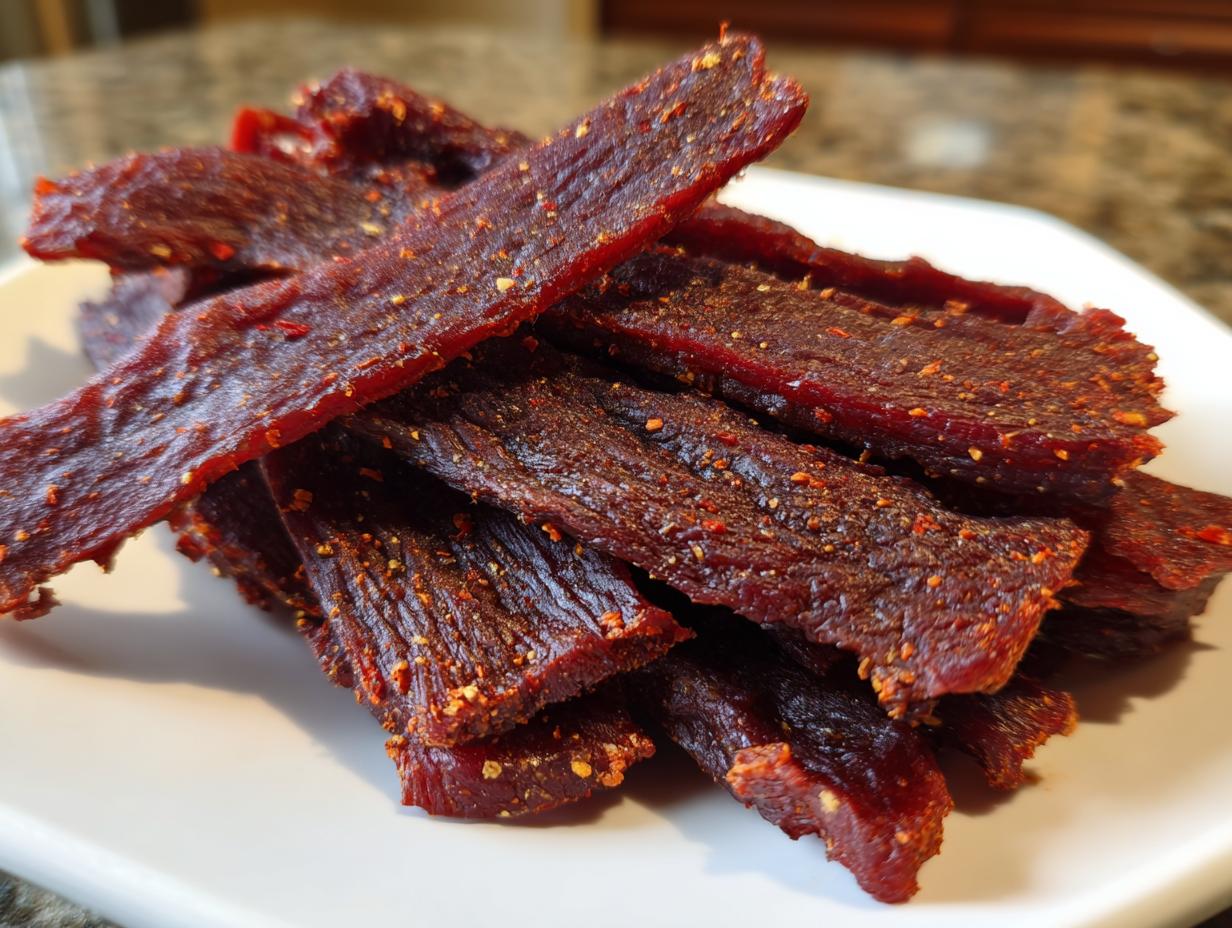
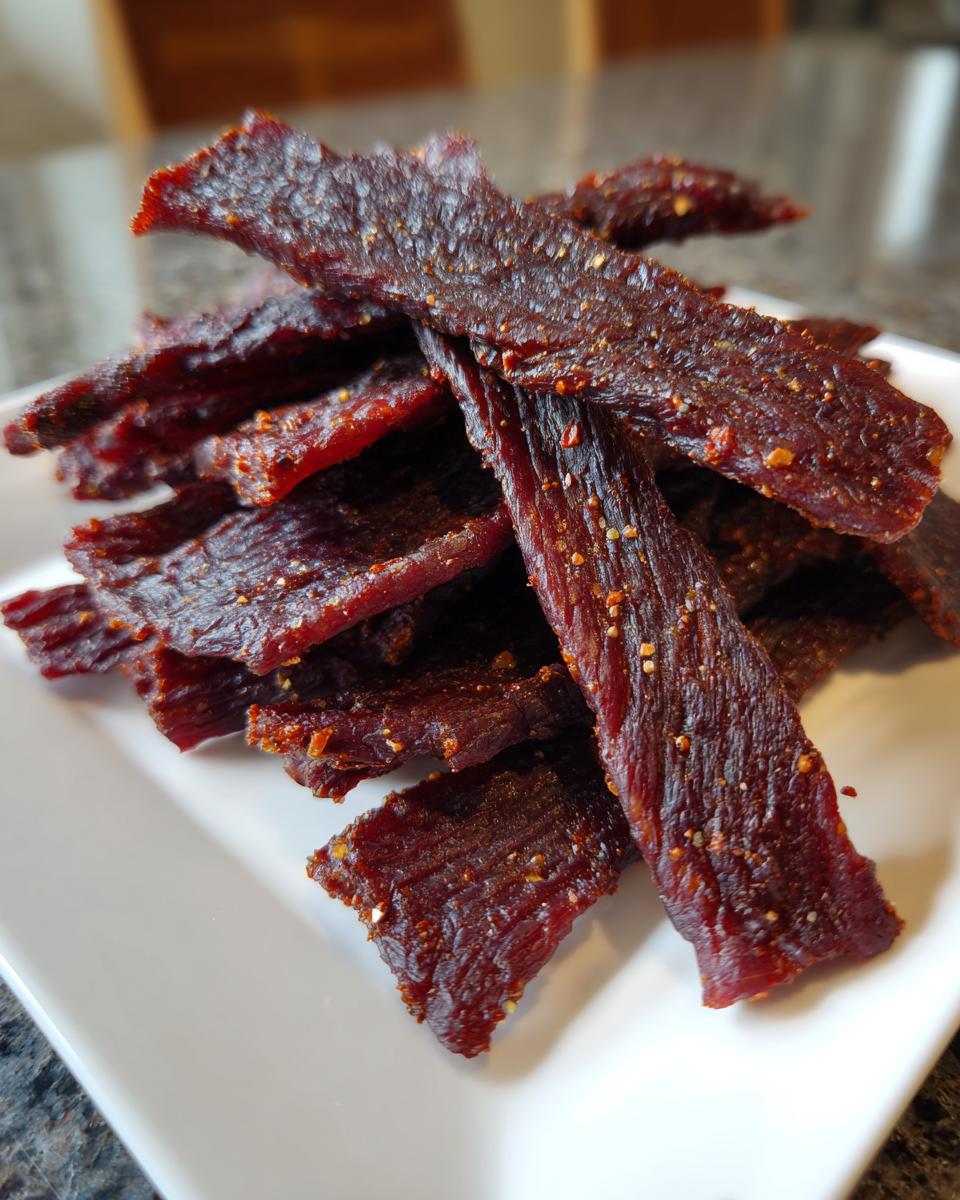
Hunting season means one thing: stocking up on quality protein that actually tastes amazing! If you’re tired of store-bought stuff that tastes like shoe leather, you are in the right spot. We cracked the code on making the absolute best venison jerky right here in your own kitchen. Our specialty isn’t just throwing a recipe together; it’s about reliability. We rigorously test every component, rooted in the traditional American cooking methods you trust from Cookery Command, ensuring your sweet and smoky flavor profile is perfect whether you use your dehydrator or your oven.
Forget guesswork! This sweet and smoky profile is simple, dependable, and guaranteed to create that satisfying chew every time. You’re going to love having this homemade jerky ready by following the dependable techniques we developed in our test kitchens. You can read more about our commitment to reliable home cooking when you check out our story here.
- Why This Sweet and Smoky Venison Jerky Recipe Works
- Essential Ingredients for Perfect Venison Jerky
- Preparing the Venison Jerky Marinade Ideas
- Slicing and Marinating for Optimal Venison Jerky
- How to Make Venison Jerky Using the Dehydrator Jerky Method
- Mastering the Oven Jerky Method for Deer Jerky Recipe
- Tips for Success When Making Homemade Jerky
- Storage and Gifting Your Venison Jerky
- Frequently Asked Questions About Venison Jerky
- Nutritional Estimates for Brown Sugar Venison Jerky
- Share Your Homemade Jerky Creations
Why This Sweet and Smoky Venison Jerky Recipe Works
When you’re relying on your harvest for your snacks, you can’t afford weak flavor or a texture that falls apart. This brown sugar venison jerky profile is tried and true because we focused only on the balance of that sweet/smoky hit and perfect dryness.
Key Benefits of Our Homemade Jerky
- You get that perfect, pliable texture every single time—no brittle snaps!
- The marinade delivers a dependable sweet and smoky jerky flavor that hunters crave.
- It’s totally reliable, giving you amazing results whether you use your favorite dehydrator jerky setup or the simple oven jerky method.
Essential Ingredients for Perfect Venison Jerky
You know, the quality of your finished jerky hinges almost entirely on what you start with. We learned this the hard way tasting batches that went rancid too fast! My number one, absolute, non-negotiable rule for homemade jerky is that the meat preparation has to be meticulous. Seriously, you can mess up the oven temperature a little, but if you leave fat on this meat, you’re asking for trouble down the road.
Ingredient Breakdown and Preparation Notes
We use a strong, simple lineup here that guarantees that sweet and smoky balance we’re aiming for. Here is exactly what you need to pull together this great deer jerky recipe.
- 2 lbs venison, trimmed of all fat and silver skin: This is crucial! Any white fatty bits will go bad long before the meat dries out. Be ruthless when trimming!
- 1/2 cup low-sodium soy sauce
- 1/4 cup Worcestershire sauce
- 1/4 cup brown sugar, packed: Make sure it’s packed tight in your measuring cup for the right sweetness.
- 2 tablespoons liquid smoke
- 1 tablespoon smoked paprika
- 1 tablespoon onion powder
- 1 teaspoon black pepper, freshly ground
- 1 teaspoon garlic powder
- 1/2 teaspoon cayenne pepper (optional): Only toss this in if you want a little bite to balance out that sweetness!
When you get your venison ready, aim for strips about 1/8 to 1/4 inch thick. It’s easier to slice if the meat is partially frozen, by the way!
Preparing the Venison Jerky Marinade Ideas
Now that your meat is perfectly trimmed—seriously, no shortcuts there—it’s time to build that amazing flavor foundation. This marinade transforms plain dried meat into crave-worthy venison jerky. It’s all about hitting that sweet spot between savory depth and campfire smokiness, which is why we lean into the brown sugar and liquid smoke.
The brown sugar we use here does more than just add sweetness; the molasses component actually helps create a slightly better crust on the outside of the meat as it dries. The Worcestershire sauce brings the umami punch, and the liquid smoke seals the deal, giving you that deep, slow-smoked taste without needing an actual smoker!
Whisk everything together well in a bowl until that sugar dissolves completely. You want a uniform liquid bath for your strips. These jerky marinade ideas are deceptively simple, but they deliver professional-level flavor every single time you make this batch of homemade jerky.
Slicing and Marinating for Optimal Venison Jerky
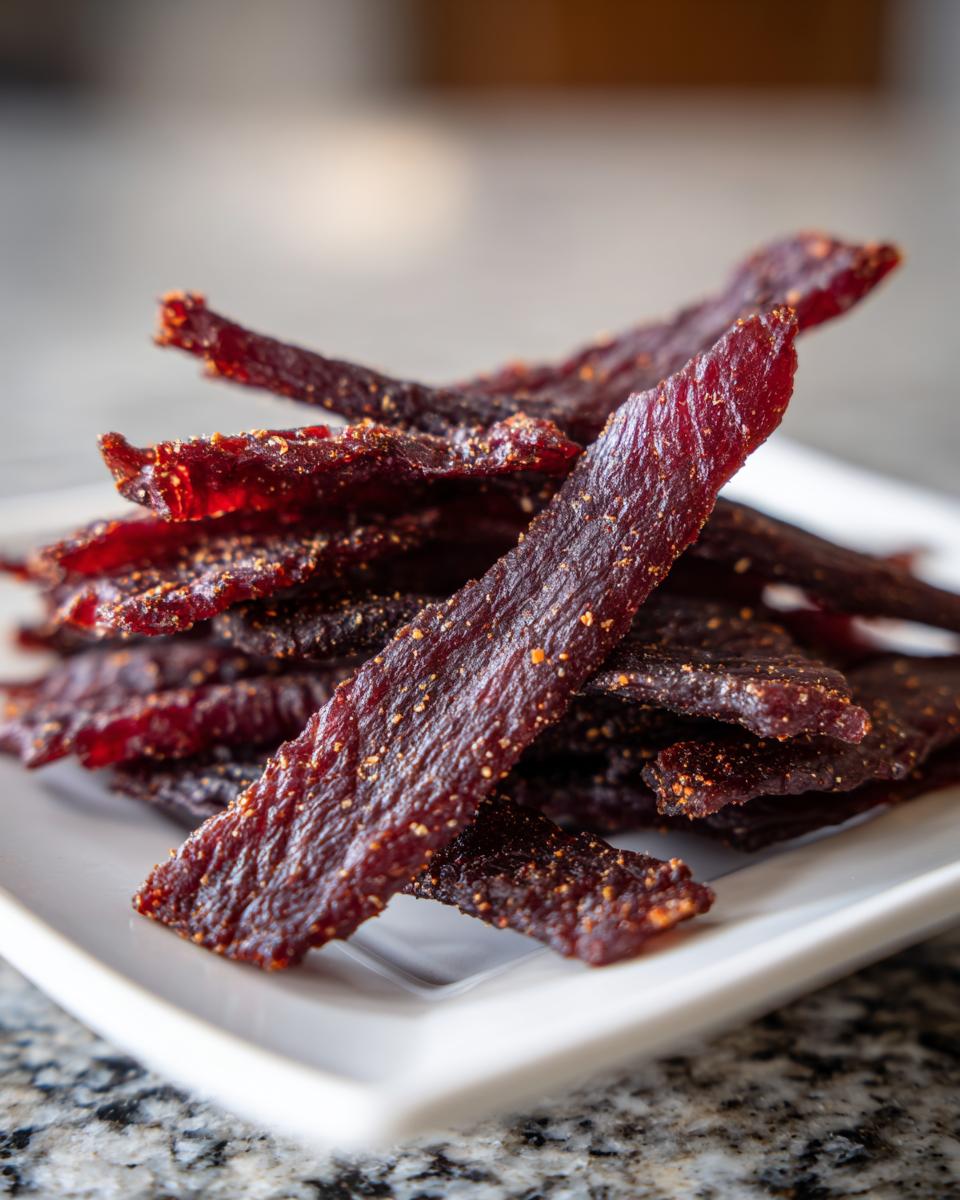
Okay, we have our beautiful, fat-free strips of meat. This next step—slicing—is where you absolutely lock in the texture of your finished venison jerky. You have to slice against the grain, folks! If you slice with the grain, your jerky will be tough as old leather, no matter how good the marinade is. We are aiming for chewable, not impossible to eat!
I always shoot for strips that are about 1/8 to 1/4 inch thick. Thicker takes forever to dry and often results in an under-dried center. Too thin, and it shatters when you pull it out of the dehydrator. The sweet spot gives you that perfect bend without snapping clean in two.
Once you’ve got your perfect slices coated in that rich, smoky mix, zip them into a bag and put them in the fridge. Six hours is the absolute minimum flavor boost you should aim for, but trust me, if you can wait 24 hours, you’ll get much deeper flavor penetration. Just remember to turn that bag over every few hours. Shaking it up makes sure every single piece gets equal quality time with the marinade.
Achieving the Right Slice Thickness
This goes back to the trimming, but the slicing needs precision, too. When I’m processing a big batch of deer jerky recipe meat right after a long trip, I get lazy and my cuts aren’t perfect. Here’s my trick: I toss the whole loin into the freezer for about 45 minutes. You don’t want it rock solid, just firm enough that your knife glides through cleanly.
Partially freezing makes it so much easier to get those uniform 1/8-inch pieces without accidentally sawing through the grain sideways. Uniform slices are key because they all dry at the exact same rate. If you have some thick pieces and some thin ones, you’ll end up with some strips being perfectly done while others are still raw in the middle. Patience on the prep work saves you disappointment later!
How to Make Venison Jerky Using the Dehydrator Jerky Method
Alright, if you have a dehydrator, this is definitely my favorite way to make venison jerky because it’s super hands-off once you get it set up right. You want to arrange those beautiful marinated strips onto your dehydrator trays. Just make sure you’re not overcrowding them! Overlapping pieces trap moisture, and we absolutely cannot have that happening right at the finish line.
Set that temperature gauge to exactly 160 degrees Fahrenheit. That’s the sweet spot for drying out the meat safely while keeping it pliable. Now, you walk away! Depending on how moist your marinade was and how thick you sliced those pieces, you are looking at anywhere from 4 to 8 hours. Don’t just trust the clock, though. You have to check them periodically.
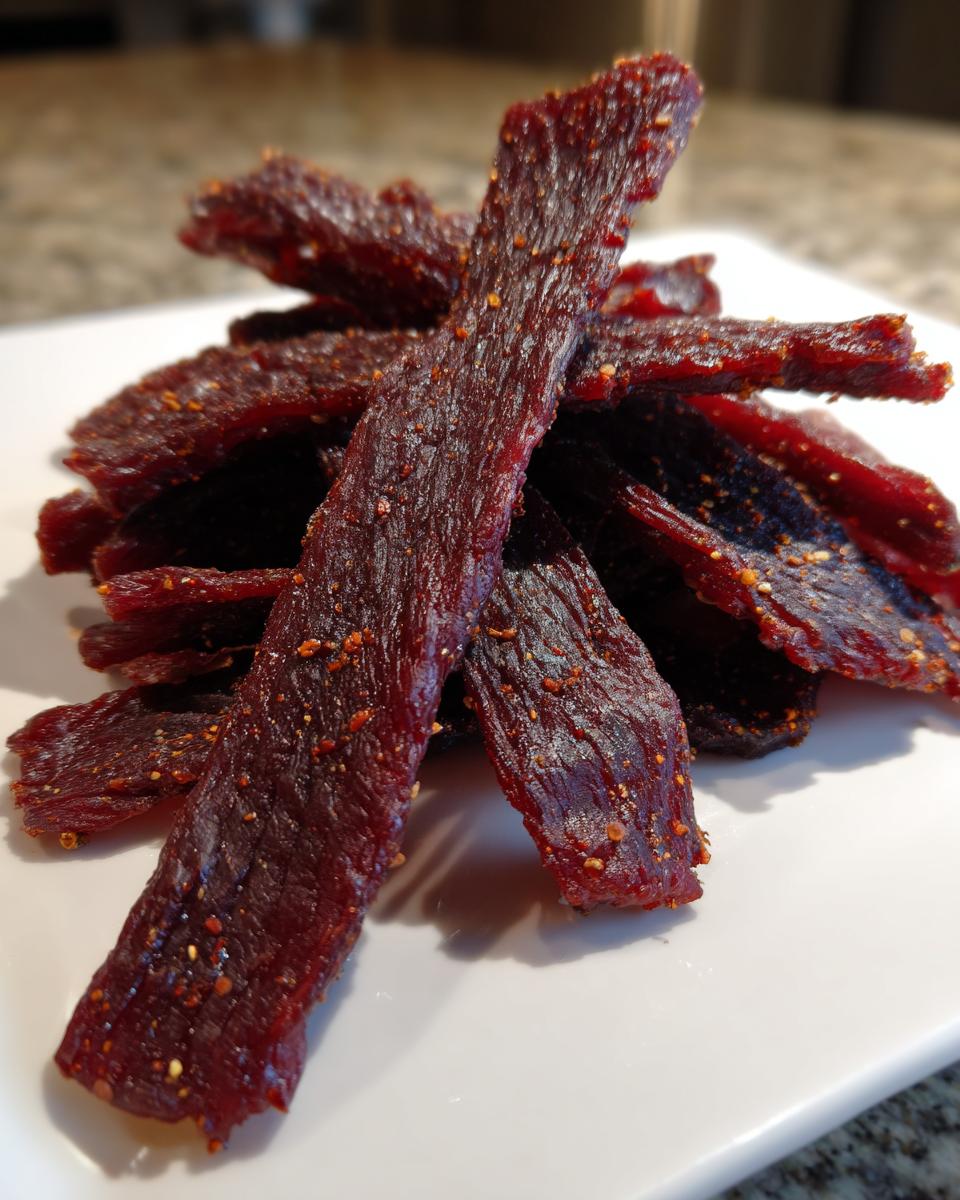
Start checking around the four-hour mark. You’re looking for that perfect bend—it should crack slightly but definitely not snap cleanly in half. If it feels soft or rubbery, give it another hour. This reliable temperature ensures you get top-tier flavor with very little fuss.
Mastering the Oven Jerky Method for Deer Jerky Recipe
Not everyone has a dedicated dehydrator rattling around in the cupboard, and frankly, I get it! My mom still swears by her oven because she says she can smell the sweet and smoky flavor developing better. If you’re using the oven jerky method, you need to treat your oven like a very low-temperature convection unit. The key here isn’t just heat; it’s ventilation!
You absolutely must set your oven to its very lowest setting—ideally between 160 and 170 degrees Fahrenheit. If your oven dips too low, the meat might just steam, and we don’t want soggy deer jerky recipe results! That’s why the second most important step is propping that door open. Seriously, use a thick wooden spoon or a heat-proof spatula wedged into the door jamb.
This slight opening allows all the evaporating moisture to escape instead of building up inside and turning your lovely strips mushy. Because the temperature variance is higher in an oven than in a dehydrator, this process takes longer—plan for 5 to scary-long 10 hours. You’ll be checking it constantly, adjusting the racks, and smelling that fantastic smoke filling the kitchen!
Tips for Success When Making Homemade Jerky
Even with the best sweet and smoky marinade, you can hit a snag right at the very end if you aren’t careful about moisture removal. Always—and I mean always—pat those marinated strips totally dry with paper towels after they come out of the fridge. If they are overly wet going onto the racks, you just tack on hours to the drying time! Those extra minutes cost you energy and risk overcooking the exterior.
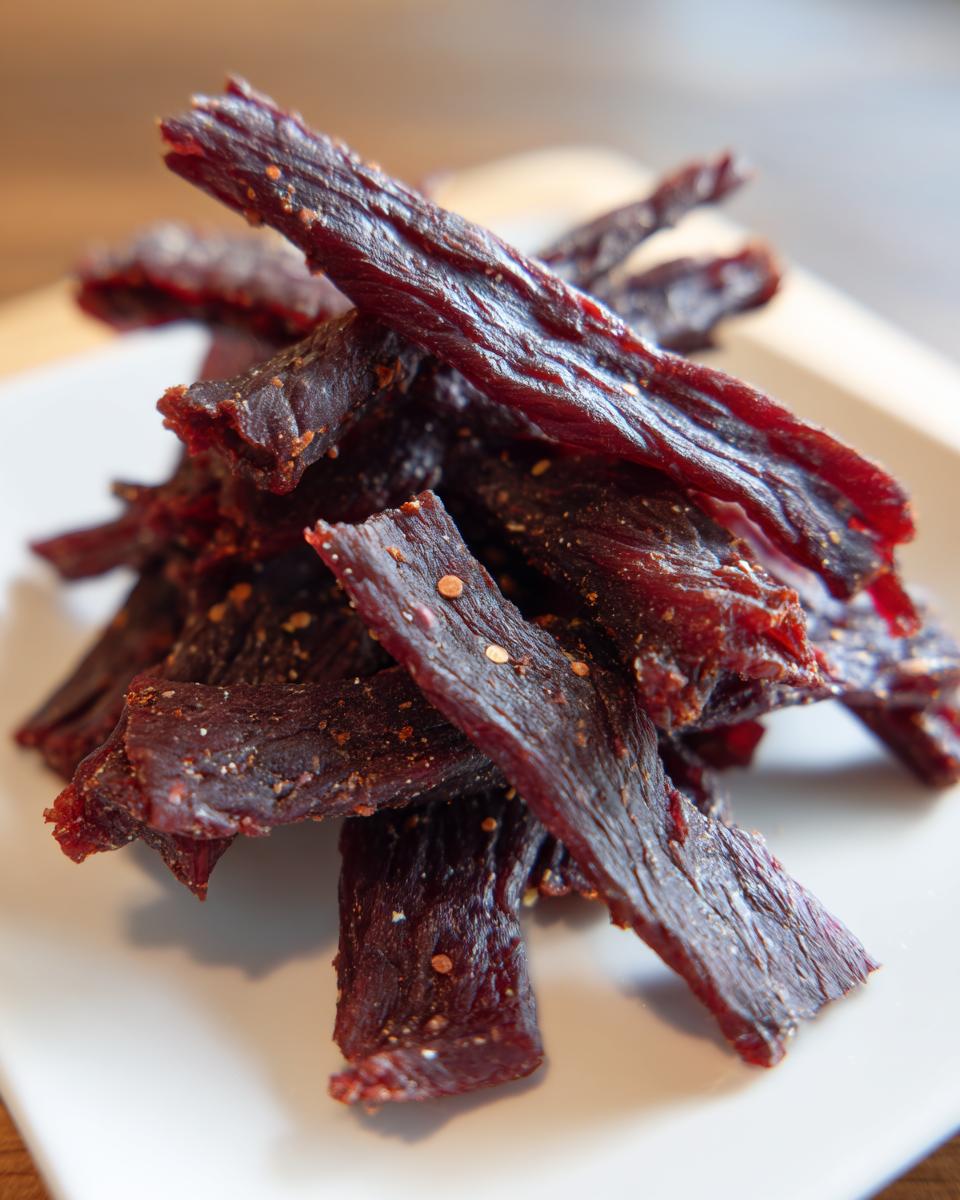
When testing your finished batch of venison jerky, don’t just rely on time. You have to touch it! It should feel dry to the touch and bend nicely. If it snaps right away, it’s too brittle and likely over-dried. But if it feels soft or squishy in the center, slide it right back in for another hour. This final check separates good jerky from great jerky.
Troubleshooting Common Issues
If you pull your jerky out and it’s feeling too soft—that means the internal moisture hasn’t fully evaporated yet, honestly. Just give it another hour at the same heat setting. Don’t panic! It’s easier to dry meat out a little more than it is to save it if you accidentally burn it by jacking up the heat.
On the flip side, if your jerky feels rock hard and snaps like a dry twig when you try to bend it, you’ve gone too far. It’s still edible—just crumbly! Next time, pull it a little sooner—maybe when you see those tiny little cracks forming along the edges. This fine-tuning through experience is what makes a recipe truly yours.
Storage and Gifting Your Venison Jerky
You’ve put in the work, and now you have pounds of perfect, smoky meat! Don’t ruin it by storing it incorrectly! Before you put any of that delicious venison jerky away, you absolutely must let it cool down completely on a wire rack. If you seal warm jerky, the trapped steam creates instant condensation, which is the enemy of good preservation.
Once it’s totally cool, tuck it into truly airtight containers. If you’re planning on keeping it for a long time, or if you’re gifting these amazing hunting season recipes, vacuum sealing is the way to go. This makes this batch of homemade jerky an incredible make ahead protein snack that lasts ages. Enjoy the fruits of your labor!
Frequently Asked Questions About Venison Jerky
I know you probably have a few lingering questions before you dive headfirst into making a massive batch of homemade jerky—I certainly did when I first started experimenting! It’s really important to make sure you nail the prep work so you get that perfect, chewy final product. If you have questions not covered here, feel free to reach out to us via the contact page—we love hearing about your adventures in making fantastic venison jerky!
Can I use frozen meat to slice for this deer jerky recipe?
Oh yes, you absolutely can! In fact, I highly recommend it for achieving those thin, professional-looking slices. You don’t want it rock solid frozen, just firm enough, which is why I mentioned putting it in the freezer for about 45 minutes before you start cutting. Slightly frozen meat is stiff enough that your knife won’t drag or mush the muscle fibers, leading to much cleaner cuts for the best deer jerky recipe results.
What is the safe internal temperature for venison jerky?
This is a big one for food safety, and it’s where the low-and-slow method shines. Since we are drying the meat rather than cooking it through heat, the critical factor is driving the moisture content down to a safe level. By maintaining 160°F in either the oven or the dehydrator, we achieve safe food drying temperatures. Once the jerky bends without breaking and is thoroughly dry, the risk associated with raw meat is largely mitigated due to that low moisture level. Don’t rush this part; the low temperature ensures safety.
How do I adjust the marinade for a spicier sweet and smoky jerky?
If you want to bump up the heat on your brown sugar venison jerky while keeping that incredible sweet and smoky profile, you have a couple of easy options! The simplest way is to double the cayenne pepper if you are already using it. For a deeper flavor complexity, try replacing a couple of tablespoons of the soy sauce with a high-quality, flavorful hot sauce—something with a little vinegary tang works wonders against that sweetness. Those tweaks fit right into our recommended jerky marinade ideas!
Nutritional Estimates for Brown Sugar Venison Jerky
I know some of you are tracking macros even when you’re snacking near the treestand, so I wanted to give you a general idea of what’s in this amazing brown sugar venison jerky. Because everyone trims their fat differently, and some soy sauces are saltier than others, please remember these numbers are only starting points!
This recipe is fantastic because once you remove all that visible fat and silver skin, you’re left with pure, lean protein. That’s why this is the ultimate make ahead protein snack for long days out in the field or on the trail. You get so much bang for your buck in terms of nutrition!
- Serving Size: 1 ounce (about 28g)
- Calories: Around 110
- Protein: Fantastic! Right around 20g per serving.
- Fat: Very low, usually just 1 gram total.
- Sodium: This is the highest variable, typically around 450 mg due to the soy sauce, so keep that in mind!
- Carbohydrates/Sugar: About 5g total, most of which comes from the brown sugar in the marinade.
This data is based on the recipe provided, assuming very thorough trimming of the venison. If you find your jerky is significantly saltier, you might have gone a little heavy on the soy sauce or picked a high-sodium brand. Overall, though, this lean protein bomb is a winner for quick energy!
Share Your Homemade Jerky Creations
Whew! That’s it! You’ve officially mastered the art of making sweet and smoky venison jerky right at home. Now that your kitchen smells like a professional smokehouse, the best part is tasting the fruits of your labor—and hearing from you!
I put so much passion and rigorous testing into this deer jerky recipe to make sure it worked perfectly for the dehydrator and the oven, but I always want to know how it turned out for your family. Did the 12-hour marinade really bring out the depth? Did you stick with just paprika, or did you try adding a little more cayenne?
Don’t be shy! Head down to the comments section below and let me know how your batches turned out. Please give this recipe a rating out of five stars—it helps other hunters and home cooks know they can trust this method! I’m excited to see what variations you tried with this fantastic make ahead protein snack!
PrintSweet and Smoky Venison Jerky
Make reliable, flavorful venison jerky at home using a simple sweet and smoky marinade, suitable for a dehydrator or oven.
- Prep Time: 20 min
- Cook Time: 5 hours
- Total Time: 5 hours 20 min
- Yield: About 1 pound 1x
- Category: Snack
- Method: Dehydrating or Oven Drying
- Cuisine: American
- Diet: Low Calorie
Ingredients
- 2 lbs venison, trimmed of all fat and silver skin
- 1/2 cup low-sodium soy sauce
- 1/4 cup Worcestershire sauce
- 1/4 cup brown sugar, packed
- 2 tablespoons liquid smoke
- 1 tablespoon smoked paprika
- 1 tablespoon onion powder
- 1 teaspoon black pepper, freshly ground
- 1 teaspoon garlic powder
- 1/2 teaspoon cayenne pepper (optional)
Instructions
- Trim the venison completely free of fat and silver skin. Fat causes the jerky to spoil quickly.
- Slice the venison against the grain into uniform strips, about 1/8 to 1/4 inch thick for best texture.
- In a medium bowl, whisk together the soy sauce, Worcestershire sauce, brown sugar, liquid smoke, smoked paprika, onion powder, black pepper, garlic powder, and cayenne pepper until the sugar dissolves.
- Place the venison strips into a large zip-top bag or non-reactive container. Pour the marinade over the meat, ensuring all pieces are coated.
- Refrigerate and marinate for 6 to 24 hours. Turn the bag every few hours to distribute the marinade evenly.
- Remove the meat from the marinade and pat the strips dry with paper towels. This helps the drying process.
- Arrange the strips on dehydrator trays or oven racks, ensuring no pieces overlap.
- For Dehydrator: Set the temperature to 160 degrees Fahrenheit (71 degrees Celsius). Dry for 4 to 8 hours, checking for doneness periodically.
- For Oven Method: Set your oven to its lowest temperature, ideally between 160 and 170 degrees Fahrenheit (71 to 77 degrees Celsius). Prop the oven door open slightly with a wooden spoon to allow moisture to escape. Dry for 5 to 10 hours, checking frequently.
- The jerky is done when it is dry to the touch and bends without breaking, showing small cracks. It should not snap cleanly or feel soft.
- Cool the jerky completely on a wire rack before storing.
Notes
- For gifting, store cooled jerky in airtight containers or vacuum-sealed bags for best freshness.
- If you prefer a less sweet flavor, reduce the brown sugar to 2 tablespoons.
- If you do not have liquid smoke, increase the smoked paprika to 2 tablespoons.
Nutrition
- Serving Size: 1 ounce
- Calories: 110
- Sugar: 4
- Sodium: 450
- Fat: 1
- Saturated Fat: 0.5
- Unsaturated Fat: 0.5
- Trans Fat: 0
- Carbohydrates: 5
- Fiber: 0
- Protein: 20
- Cholesterol: 55