Authentic & Easy Cassava Fufu Recipe for Beginners: The Perfect West African Staple
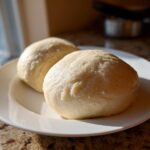
Learn how to make soft, smooth, and stretchy Cassava Fufu at home. This beginner-friendly recipe guides you through preparing this traditional West African staple food, which pairs perfectly with your favorite soups and stews.
- Prep Time: 5 min
- Cook Time: 15 min
- Total Time: 20 min
- Yield: 4 servings 1x
- Category: Side Dish
- Method: Stovetop Cooking
- Cuisine: West African
- Diet: Gluten Free
Ingredients
Scale
- 2 cups Cassava Flour (or Fufu flour mix)
- 3 cups Water
- Pinch of Salt (optional)
Instructions
- Measure the water into a medium saucepan and bring it to a boil over medium-high heat.
- Once the water is boiling, reduce the heat to low.
- Slowly sprinkle about 1/4 cup of the cassava flour into the hot water while stirring constantly with a wooden spoon or sturdy spatula. This prevents lumps.
- Continue stirring until the mixture thickens slightly.
- Add the remaining cassava flour gradually, stirring vigorously and continuously. You need to mix hard to incorporate the flour fully and eliminate all lumps.
- Keep stirring and folding the dough against the sides of the pot. The mixture will become very thick and form a smooth, elastic dough ball. This process takes about 5 to 10 minutes of continuous stirring.
- If the dough is too stiff, add a tablespoon of hot water at a time and continue mixing until you reach your desired soft, pliable consistency.
- Remove the fufu dough from the heat.
- Wet your hands slightly to prevent sticking. Scoop out portions of the dough and roll them into smooth, uniform balls.
- Serve the fufu balls immediately with your preferred West African soup or stew.
Notes
- For a slightly different texture, you can substitute half the cassava flour with plantain flour or yam flour to make a mixed fufu.
- To achieve a truly smooth and stretchy fufu, use a heavy-duty wooden spoon and ensure you stir and fold the dough against the sides of the pot consistently.
- Fufu is traditionally eaten by pinching off a small piece, making an indentation with your thumb, and dipping it into the soup or stew.
Nutrition
- Serving Size: 1 ball
- Calories: 180
- Sugar: 0.5
- Sodium: 5
- Fat: 0.2
- Saturated Fat: 0.1
- Unsaturated Fat: 0.1
- Trans Fat: 0
- Carbohydrates: 41
- Fiber: 1
- Protein: 1.5
- Cholesterol: 0
Find it online: https://cookerycommand.com/easy-cassava-fufu-recipe-beginners/