
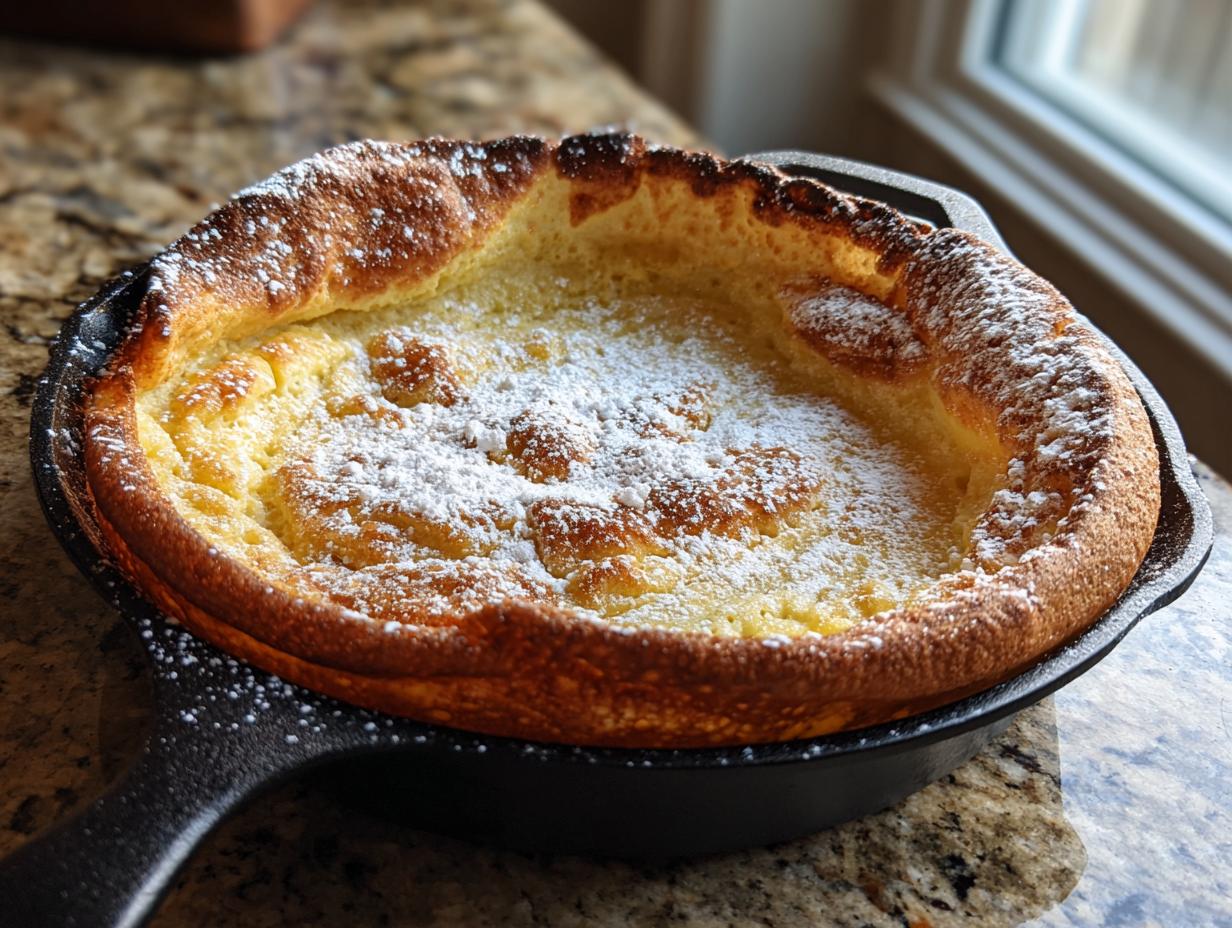
When we talk about making breakfast truly memorable, forget the stack of flat, ordinary flapjacks. We need drama! We need texture that reaches for the ceiling! I truly believe, just like Emily taught us at Cookery Command, that even the simplest morning meal should spark joy and confidence in your kitchen, not complication. That’s exactly what this absolutely stunning, dramatic, and puffy Dutch baby pancake delivers. If you’re looking for the perfect luxury breakfast ideas for Mother’s Day brunch that will physically puff up and wow everyone the second it comes out of the oven, you are in absolutely the right place. Check out all my favorite breakfast and brunch recipes for more inspiration! I’ve got the method down pat so you can focus on celebrating!
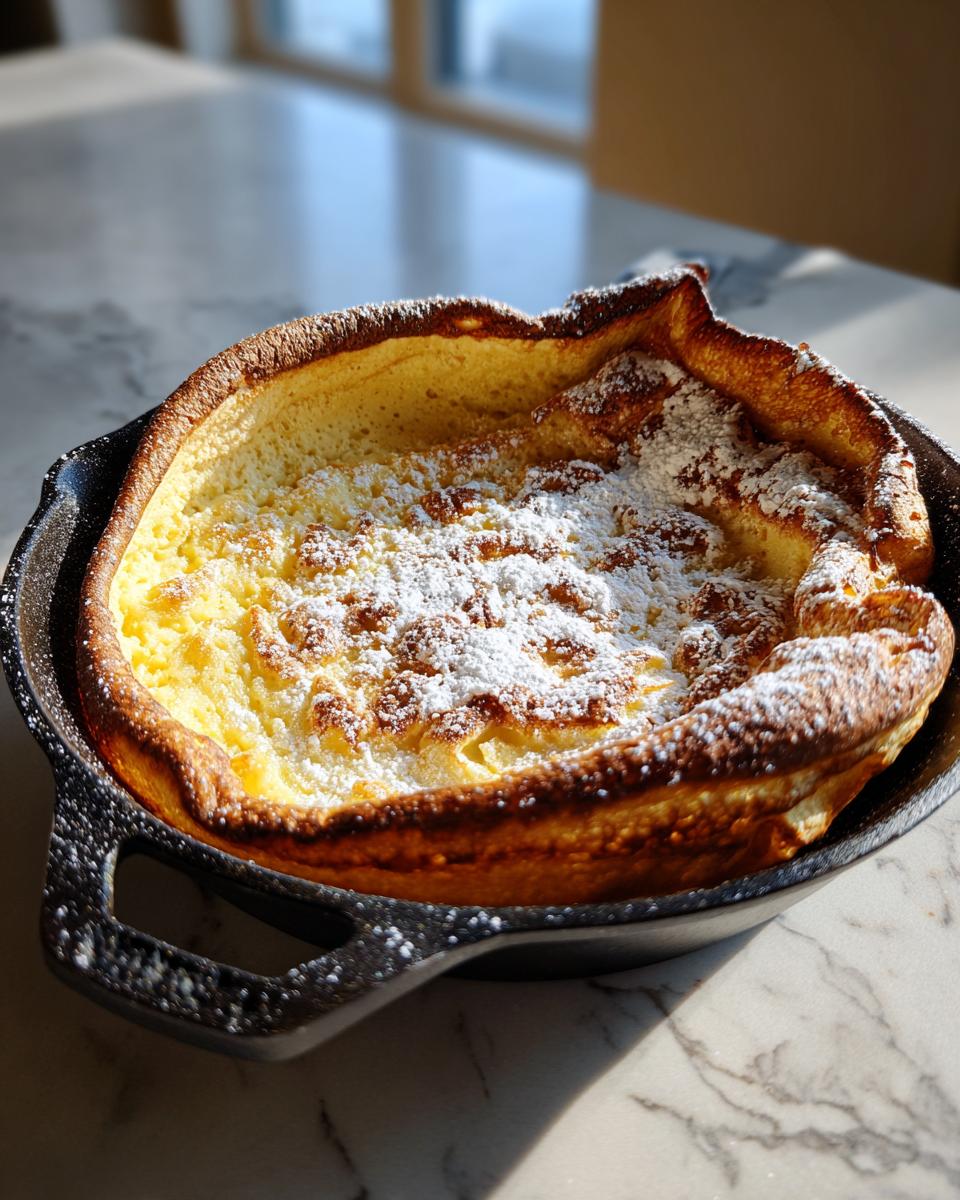
- Why You Need This Show-Stopping Dutch Baby Pancake
- The Science of the Rise: Mastering the Cast Iron Dutch Baby
- Gathering Ingredients for the Perfect Dutch Baby Pancake
- Step-by-Step Instructions for a Flawless Dutch Baby Pancake
- Serving Suggestions for Your Luxury Breakfast Ideas
- Tips for Success with Your Puffy Pancake
- Storage and Reheating Instructions for Leftover Dutch Baby Pancake
- Frequently Asked Questions About the Dutch Baby Pancake
- Nutritional Estimate for This Puffy Pancake
Why You Need This Show-Stopping Dutch Baby Pancake
Seriously, why settle for flat pancakes when you can have edible architecture? This recipe isn’t just breakfast; it’s an event. Here’s what makes this German pancake recipe the number one choice for special mornings:
- The towering, dramatic rise that looks impossible but happens with basic ingredients.
- A luxurious, custardy center that utterly avoids that dense, flat texture you get elsewhere.
- It’s lightning fast! Prep takes under five minutes, making it the perfect Mothers Day brunch main.
- It cooks in one pan—that gorgeous cast iron dutch baby—meaning cleanup is minimal!
The Science of the Rise: Mastering the Cast Iron Dutch Baby
Okay, listen up, because this is where we separate the fancy brunch queens from the standard breakfast makers. We aren’t just mixing ingredients here; we are exploiting physics to get that incredible, gravity-defying puff! The reason this works so well, why your Dutch baby pancake towers like a hot air balloon, boils down to one main thing: HEAT SHOCK.
You have to preheat that skillet—a 10-inch one is perfect—to 425°F *with* the oven. When heat transfers quickly from a screaming hot surface to the liquid batter, it flashes the water content into steam, and that steam is what pushes the batter straight up. If the pan isn’t hot enough, the steam just gently rises, and you end up with a sad, flat pancake. Also, notice how thin the batter is? That’s deliberate! Less dense mixture means the steam has an easier job lifting it sky-high.
Essential Equipment for Your Puffy Pancake
You absolutely need the right tools for this job. Trying this in a thin, cold pan just won’t give you the results you want. For the best structural support and heat retention, stick to these two basics:
- 10-inch Cast Iron Skillet: This is non-negotiable for the best performance. Its thickness holds the heat perfectly.
- Oven Mitts: Seriously, that pan will be dangerously hot when it comes out—don’t burn yourself trying to rush this luxury breakfast idea!
Gathering Ingredients for the Perfect Dutch Baby Pancake
Because the magic of this puffy pancake relies on that aggressive rise, we keep the ingredient list beautifully simple. There’s no room for heavy additions here; we want that thin batter to soar! You’re going to need exactly three large eggs—freshness really matters here, trust me on this one—along with half a cup each of milk and all-purpose flour. Don’t forget that quarter teaspoon of salt; it balances everything out. The real star of the preparation, besides the oven, is the butter. We use two tablespoons of unsalted butter, but it goes in the *hot* pan, not the batter, so keep that separate in your mind!
Ingredient Notes and Substitutions
Since this is such a minimal recipe, the quality of your core components shines through. Always use the freshest eggs you can find—they incorporate air better, which helps with our science experiment! This wonderful German pancake recipe is naturally vegetarian, so no worries there if you’re cooking for anyone with dietary restrictions. We aren’t using baking soda or powder; the rise comes strictly from the heat and the eggs, so don’t be tempted to add any!
Step-by-Step Instructions for a Flawless Dutch Baby Pancake
Now for the main event—the execution. Getting that dramatic rise on your Dutch baby pancake depends entirely on following these steps without skipping or rushing the heat-up phase. First thing’s first: Preheat your oven to 425 degrees Fahrenheit, and make sure that 10-inch cast iron skillet is sitting right inside while it gets roaring hot. We need that metal scorching when the batter hits it!
Mixing the Batter: Avoid Overworking for Maximum Rise
While the oven is heating, grab your ingredients. Start by whisking those three large eggs in a medium bowl until they look light and a little frothy—we want to incorporate some air here, but gently! Next, gradually whisk in the milk and the salt. Now, for the final dry component: the flour. Whisk it in slowly until it’s *just* combined. I mean it—just combined! If you see a few tiny lumps, that is perfectly fine. Do not grab an electric mixer or beat it into submission. Remember, we want that thin consistency to help it climb the sides of the pan. If you overmix, you’ll develop too much gluten, and that beautiful rise turns into a rubbery mess. Head over to my fluffy buttermilk pancakes post if you want to practice gentle mixing!
The Crucial Transfer to the Hot Cast Iron Dutch Baby
This is the high-stakes moment! Using thick oven mitts, you must carefully pull that screaming hot skillet out of the oven. Toss those two tablespoons of butter right into the pan. It should melt almost instantly! Quickly swirl the pan so that butter coats the bottom and pops up the sides a bit. Now, act fast: pour your thin batter directly into the buttered, hot skillet. Immediately—and I mean immediately—return the whole assembly back into the 425°F oven. Do not, under any circumstances, open that oven door for the first 15 minutes. If you peek, you let the cold air in, and your stunning puff will deflate sadly!
Serving Suggestions for Your Luxury Breakfast Ideas
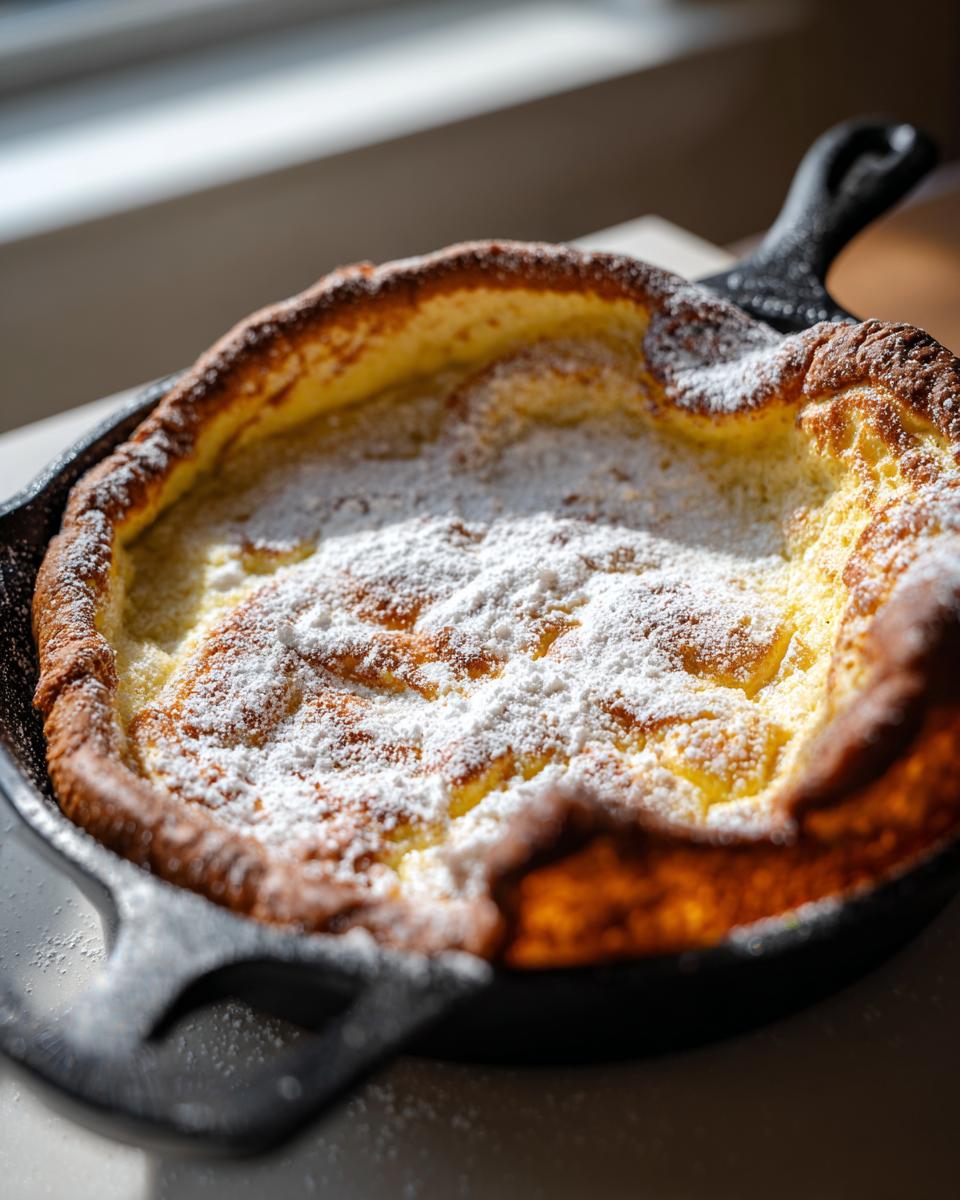
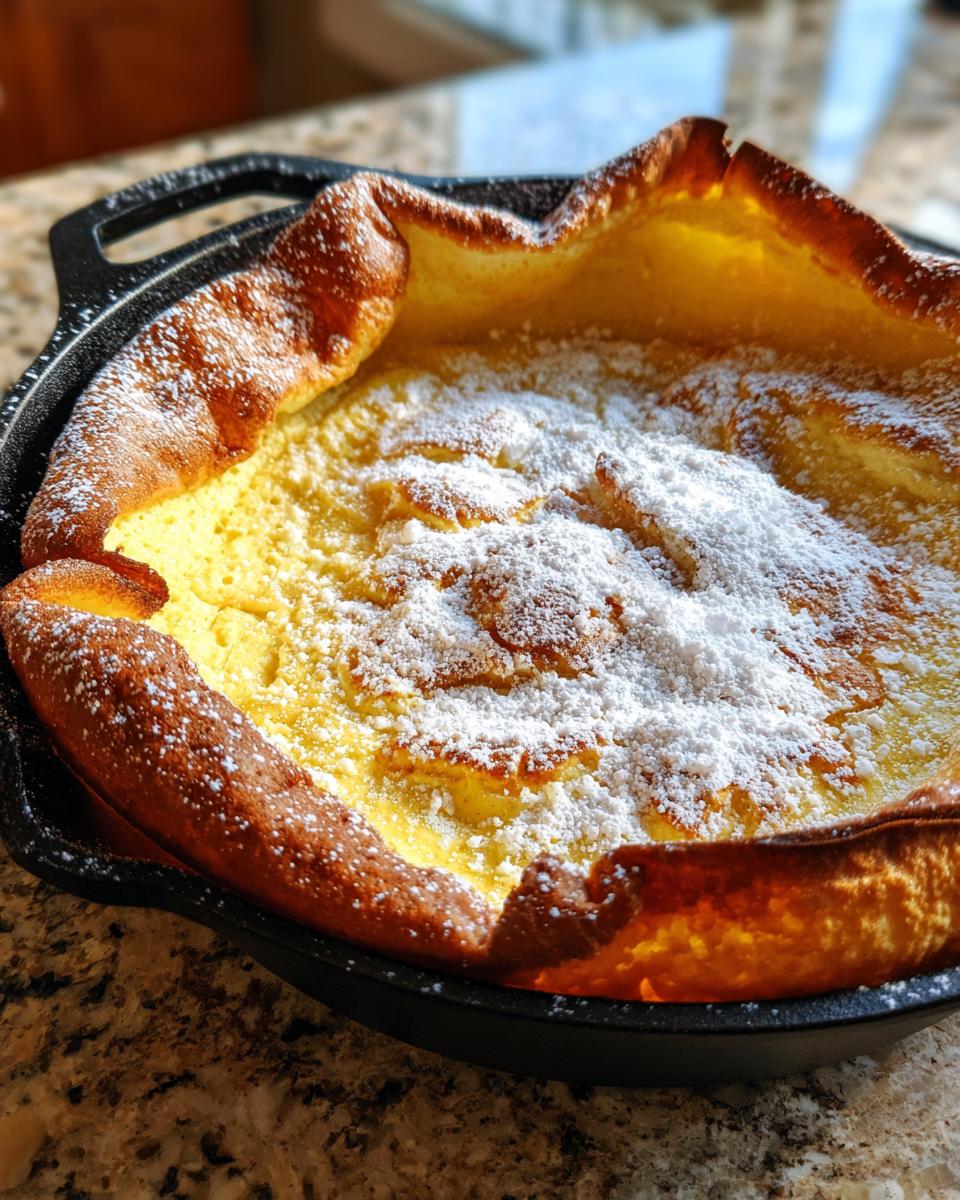
When that golden-brown beauty emerges, you have to serve it instantly! The appearance is half the fun, so I always bring the whole cast iron skillet right to the table—it’s a fantastic presentation for your Mothers Day brunch main. The puff won’t last forever, so speed is key here.
The classic way, which lets the texture shine, is simple: dust it generously with powdered sugar. Then, grab a lemon and give it a big, bright squeeze of juice right before anyone digs in. That tartness cutting through the buttery richness? Pure bliss! For more ideas on elevating your brunch spread, take a look at my other favorites.
Tips for Success with Your Puffy Pancake
Even though this German pancake recipe is straightforward, those last few details really make the difference between a good puff and an epic puff. Trust me, I’ve learned these the hard way!
First tip: Check your oven temperature. I know we preheat everything, but if your oven runs cool, your steam reaction won’t be powerful enough. If you can, use an oven thermometer to verify that 425°F target. A couple of degrees off can mean a couple of inches lost in height!
Second, unlike some other pancake recipes, you should absolutely *avoid* resting your batter. This batter seems thin, and sometimes people think it needs time to hydrate, but in this case, we want to use it the second it comes together. Resting just lets the gluten relax and the thin structure settle, which works against our quick-steam reaction.
Finally, timing is everything once it’s baked. As soon as that beautiful, golden brown edge comes out, get it to the table! It starts deflating almost immediately as it cools, so you want everyone ready to scoop up their portion while it’s still dramatically tall. It might look strange, but that’s half the rustic charm of the cast iron dutch baby.
Storage and Reheating Instructions for Leftover Dutch Baby Pancake
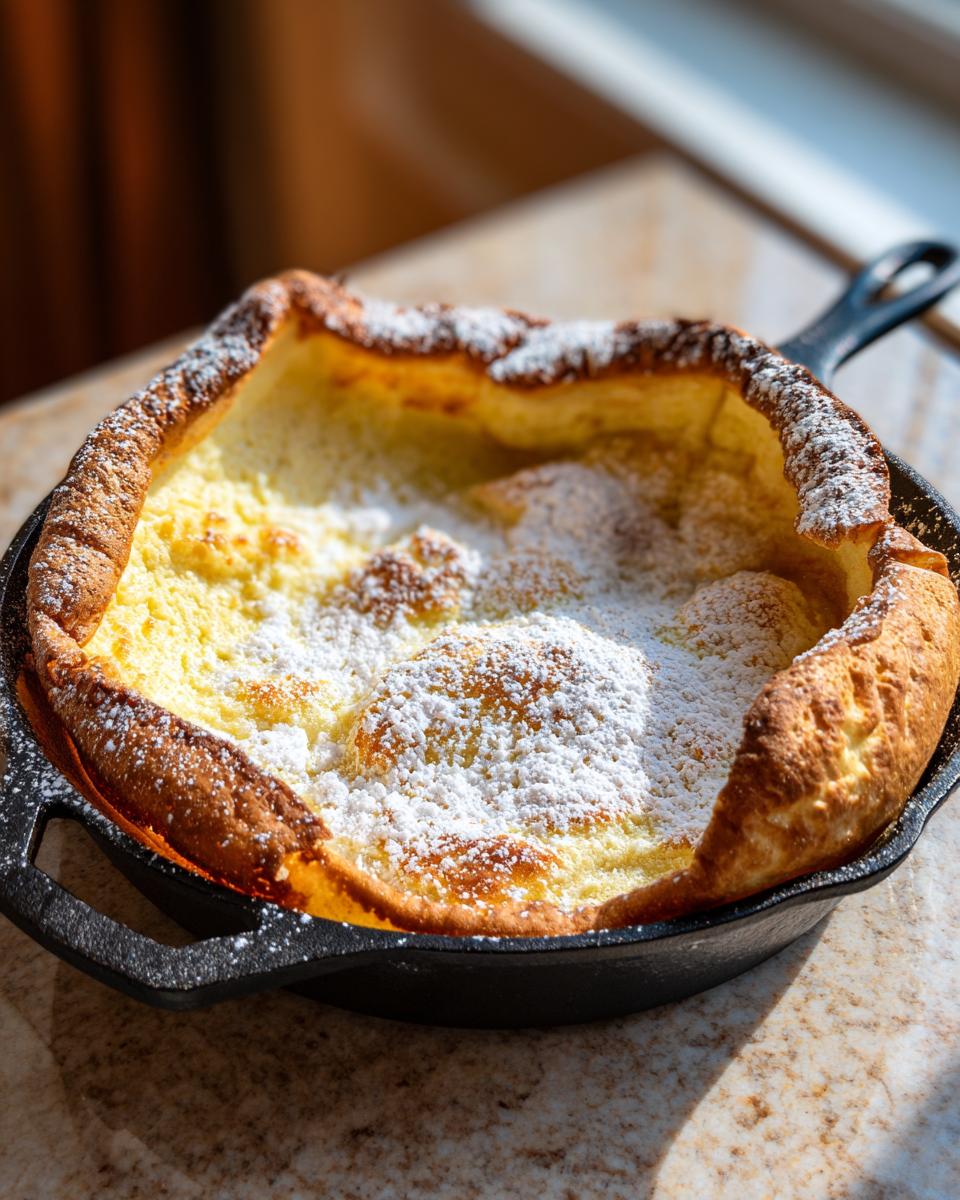
Look, I’m going to be honest with you: this puffy pancake is really, really best eaten the second it comes out of the oven. That amazing tower of golden batter deflates pretty quickly as it cools down because that trapped steam starts to escape. That’s just physics, you can’t fight it!
If you happen to have any leftover—which is rare in my house—let it cool completely first. Then, you just need to store it in an airtight container at room temperature. Don’t bother trying to keep it puffy; it won’t happen. When you want to resurrect it, skip the microwave entirely! Microwave heat is the enemy of texture here. I recommend popping a piece into a toaster oven or a regular oven set around 300°F for just a few minutes until it’s warmed through. It won’t puff back up dramatically, but it will regain some of that lovely, slightly crispy integrity!
Frequently Asked Questions About the Dutch Baby Pancake
It’s normal to have a few worries when trying something that looks this dramatic, especially when you are aiming for that perfect rise! Here are the things I get asked most often about making the best Dutch baby pancake for your family.
Why did my Dutch baby pancake fall flat?
Oh, I know this disappointment! If you ended up with something closer to a crepe than a cloud, it almost always comes down to the temperature, or your curiosity getting the better of you. You absolutely must have that screaming hot pan ready before the batter goes in—that shock is what creates the steam that lifts the pancake. Secondly, and this is a serious rule: Do *not* open that oven door for at least the first 15 minutes of baking time! If cold air hits the delicate structure before it sets, it collapses instantly. Keep it closed and trust the process!
Can I make this German pancake recipe without a cast iron skillet?
You certainly can try, but you’re going to miss out on some serious height! The whole point of what makes this recipe stand out is the heavy, consistent heat of the cast iron dutch baby. That metal holds the heat better than anything else. If you don’t have one, grab the oven-safe skillet or baking dish you own that has the thickest bottom. A heavy glass pie dish works okay, but just be prepared that your amazing rise might be a little less dramatic. It will still taste delicious, though!
How can I make this a savory Dutch baby pancake?
This is such a fun variation! While the recipe as is stands as a wonderful luxury breakfast idea, you can easily take it savory. Before you pour the batter into the hot pan, sprinkle a little grated Parmesan cheese, black pepper, and perhaps some finely chopped chives right into the melted butter. You want to skip the powdered sugar and lemon, naturally! Instead, try serving it topped with sautéed mushrooms, fresh spinach, or maybe even some smoked salmon and crème fraîche.
Nutritional Estimate for This Puffy Pancake
Now, I know when we are making something truly indulgent like this towering Dutch baby pancake—especially for a special occasion like Mother’s Day—we aren’t usually thinking about macros! However, for those who are tracking, I wanted to give you a real snapshot of what you’re eating here, as this German pancake recipe is primarily eggs, flour, and butter.
As this recipe yields two generous servings, the following estimates are based on consuming exactly half of the final product. Remember, these numbers are approximate because the brand of flour or milk you use can change things slightly, but this gives you a great ballpark for this luxury breakfast idea.
- Serving Size: 1/2 recipe
- Calories: Approximately 350
- Fat: 20g (with 12g being Saturated Fat)
- Carbohydrates: 28g
- Protein: 14g
- Sugar: 8g
- Cholesterol: 180mg
See? Not too shabby for a show-stopper that doesn’t even need baking powder! It’s all about those eggs giving us the lift we need.
PrintThe Show-Stopping Cast Iron Dutch Baby Pancake

Make a dramatic, puffy Dutch baby pancake in a cast iron skillet for a luxurious family breakfast that avoids the flatness of traditional pancakes.
- Prep Time: 5 min
- Cook Time: 25 min
- Total Time: 30 min
- Yield: 2 large servings 1x
- Category: Breakfast
- Method: Baking
- Cuisine: German/American
- Diet: Vegetarian
Ingredients
- 3 large eggs
- 1/2 cup all-purpose flour
- 1/2 cup milk
- 1/4 teaspoon salt
- 2 tablespoons unsalted butter
- Powdered sugar, for dusting
- Lemon juice, for serving
Instructions
- Preheat your oven to 425 degrees Fahrenheit. Place a 10-inch cast iron skillet inside the oven while it preheats.
- In a medium bowl, whisk the eggs until they are light and frothy.
- Gradually whisk in the milk, salt, and then the flour until the batter is just combined. Do not overmix; a few small lumps are acceptable. This batter is thin, which helps with the rise.
- Carefully remove the hot skillet from the oven using oven mitts. Add the 2 tablespoons of butter to the hot skillet. Swirl the pan to coat the bottom and sides as the butter melts quickly.
- Pour the batter directly into the hot, buttered skillet.
- Immediately return the skillet to the oven. Bake for 20 to 25 minutes. Do not open the oven door during the first 15 minutes of baking, as this will cause the pancake to deflate.
- The Dutch baby is done when it is puffed high around the edges, golden brown, and the center is set.
- Remove from the oven. Dust generously with powdered sugar and serve immediately with a squeeze of fresh lemon juice.
Notes
- The science of the rise depends on the very hot skillet and butter, which creates steam rapidly, puffing the thin batter.
- For the best visual effect, serve this luxury breakfast idea directly from the cast iron skillet at the table.
- This recipe makes a perfect Mothers Day brunch main dish.
Nutrition
- Serving Size: 1/2 recipe
- Calories: 350
- Sugar: 8
- Sodium: 250
- Fat: 20
- Saturated Fat: 12
- Unsaturated Fat: 8
- Trans Fat: 0
- Carbohydrates: 28
- Fiber: 1
- Protein: 14
- Cholesterol: 180