

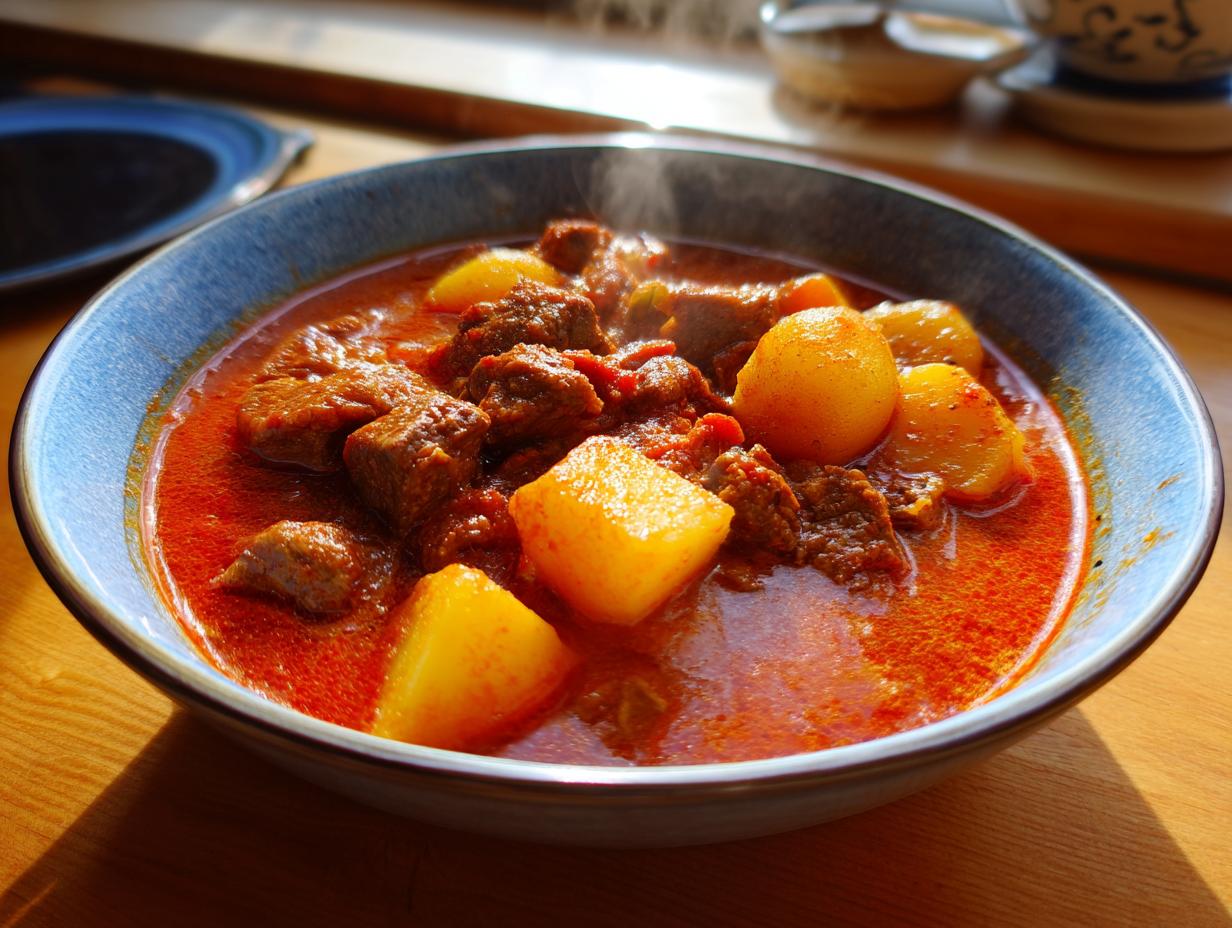
When life calls for something truly enveloping—that deep, soulful warmth that only comes from hours of slow cooking—you need a recipe you can depend on. Forget the thin, disappointing versions; we are making serious, hearty comfort food today. This goulash recipe brings that beautiful, traditional Hungarian experience right to your stovetop. Here at Cookery Command, we take heritage recipes and prove they can be perfectly reliable with just a little technique. We focus hard on essentials like getting the absolute best paprika because that depth of flavor is what separates a good stew from a truly spectacular one. If you love learning classic techniques, check out how we handle flavor bases for cakes over here: Italian Love Cake Recipe. Trust me, this stew will be your new benchmark for savory excellence.
- Why This goulash recipe Stands Out: Tradition Meets Technique
- Essential Ingredients for Your goulash recipe
- Step-by-Step Instructions for Authentic goulash recipe
- Making goulash recipe in Alternative Appliances
- Serving Suggestions for Your goulash recipe
- Storage and Reheating Instructions for goulash recipe
- Frequently Asked Questions About This goulash recipe
- Understanding Hungarian Cooking Through This goulash recipe
- Estimated Nutritional Data for goulash recipe
Why This goulash recipe Stands Out: Tradition Meets Technique
What makes this approach the one you should trust? It’s simple: time and technique working together. We aren’t just throwing ingredients in a pot for a quick weeknight dinner, although we have speedy options later! This Authentic Hungarian Goulash demands respect for the simmering process. Rushing the beef means you end up with chewy cubes instead of melt-in-your-mouth tenderness.
The real secret, and where technique shines, is blooming the paprika, which we cover in the steps below. That careful warming of the spices in the fat creates a base flavor that defines a true, Hearty Beef and Vegetable Stew. We test and retest our simmer times so you get that signature deep, luxurious sauce every single time. Knowing the timing upfront gives you confidence!
If you’re looking for other meals that focus on rich liquid bases, you’ll want to see how we layer flavor in our easy beef noodle soup recipe.
Recipe Snapshot: Prep, Cook, and Yield
I know your time is valuable, so here’s the quick overview of what this meal requires. Transparency is key to cooking successfully!
- Prep Time: About 25 minutes—mostly chopping the onions and slicing the beef cubes.
- Cook Time: We need a minimum of 2 hours and 30 minutes on the stove for that deep, slow merge of flavors.
- Yield: This makes a big pot—about 6 generous servings—perfect for leftovers!
Essential Ingredients for Your goulash recipe
Okay, let’s talk about what goes into the pot. Buying ingredients is half the battle won when you’re aiming for that authentic taste, so pay attention here! This is the heart of any amazing stew, and cutting corners here means you might miss out on that deep, rich flavor we are chasing.
The meat choice is critical—you absolutely need beef chuck, cut into uniform 1-inch cubes. That connective tissue breaks down beautifully during that long, slow simmer, giving you tender results. We’re also relying on standard aromatic veggies—onions and garlic are non-negotiable staples here.
Before you jump to the list, take a peek at the accompanying crispy potato recipe—Ultimate Crispy Roast Potatoes Recipe—because sometimes you need a crunchy side dish to go with your soft stew!
- 3 lbs beef chuck, cut into 1-inch cubes
- 2 tablespoons lard or vegetable oil
- 2 large yellow onions, chopped
- 4 cloves garlic, minced
- 1/4 cup sweet Hungarian paprika (high quality recommended)
- 1 tablespoon hot Hungarian paprika (adjust to taste)
- 1 teaspoon dried marjoram
- 1/2 teaspoon caraway seeds, crushed
- 1 bay leaf
- 1 teaspoon salt
- 1/2 teaspoon black pepper
- 1 large tomato, chopped
- 1 green bell pepper, seeded and chopped
- 4 cups beef broth
- 2 medium potatoes, peeled and cubed (optional, for a thicker stew)
- 1 tablespoon all-purpose flour (optional, for thickening)
Ingredient Notes and Substitutions for goulash recipe
I can’t stress this enough: the paprika matters more than almost anything else! You need authentic Hungarian paprika, not the standard stuff from the spice aisle. The sweet variety provides that incredible color and smoky depth, while the hot paprika just gives it a gentle kick. If you can only find one kind, go heavy on the sweet one.
Now, fat! Traditionally, this stew uses lard, which is amazing for sealing in flavor, but if that’s not your thing, good quality vegetable oil works just fine. Don’t try to use olive oil here; it doesn’t handle the heat the same way for browning.
About the potatoes: they are optional. If you leave them out, you have a purer, thinner Hungarian stew base, perfect for pouring over noodles. If you want that thicker, more rustic, filling stew, toss them in during the last half hour. They’ll break down a touch and naturally help thicken the liquid!
Step-by-Step Instructions for Authentic goulash recipe
This is where the magic happens! Follow these steps exactly, especially when it comes to dealing with our precious paprika, and you’ll end up with the most flavorful stew you’ve ever made. We start by prepping the beef—pat those cubes dry, seriously; moisture equals steaming, not browning!
- Pat the beef cubes dry with paper towels. Season lightly with salt and pepper.
- Heat the lard or oil in a large Dutch oven or heavy-bottomed pot over medium heat. Brown the beef in batches, ensuring not to overcrowd the pot. Remove browned beef and set aside.
- Add the chopped onions to the pot and cook slowly until they are soft and translucent, about 8 to 10 minutes. Don’t let them brown—we want sweet onions here, not caramelized ones!
- Crucial Flavor Step Alert! Remove the pot from the heat entirely. Stir in the sweet paprika, hot paprika, marjoram, and caraway seeds right away. Stir constantly for about 30 seconds until you can really smell those spices waking up. Trust me, taking the pot off the direct flame prevents the paprika from burning, which makes it bitter. This step is crucial for flavor development!
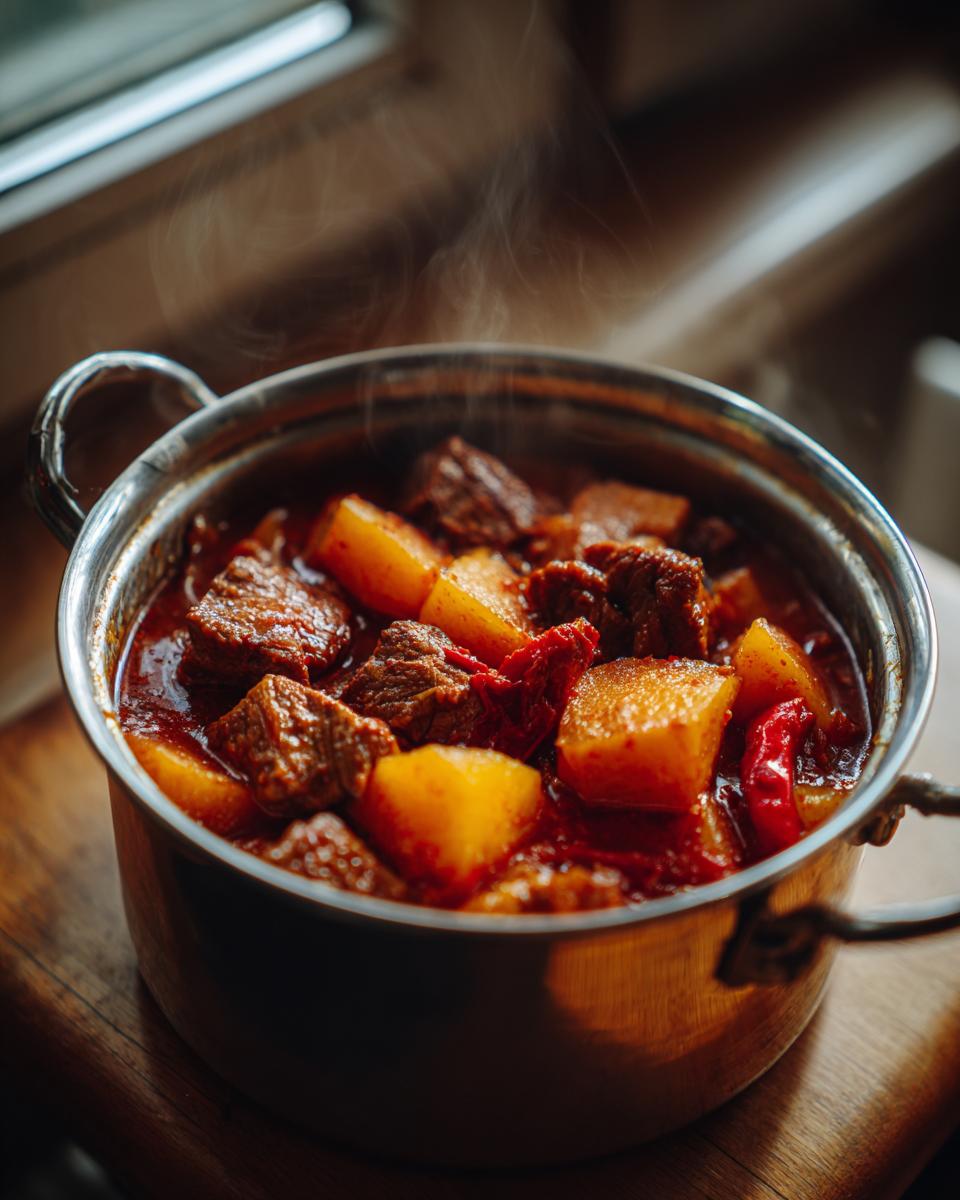
- Return the pot to low heat. Add the minced garlic, chopped tomato, and bell pepper. Cook gently for 2 minutes.
- Return the browned beef to the pot. Add the bay leaf, salt, and pepper. Stir everything well to make sure every beef cube is coated in that gorgeous orange spice mixture.
- Pour in enough beef broth to just cover the meat. Bring the mixture up to a gentle simmer.
- Cover the pot and reduce the heat way down low. Now, we wait! Simmer slowly for 1.5 to 2 hours, or until the beef is very tender. Check occasionally and add small amounts of water or broth if the liquid level drops too low.
- If you decided to use potatoes, add those cubed beauties during the last 30 minutes of cooking so they soften perfectly but don’t turn to mush.
- If you prefer a slightly thicker stew, mix the flour with 2 tablespoons of cold water to create a slurry—this is just a fancy term for mixing them until smooth! Stir that slurry into the simmering goulash and cook for 5 more minutes until it thickens right up.
- Remove the bay leaf—nobody wants to bite into that! Taste and adjust seasoning; it probably needs just a hair more salt.
Achieving Tender Meat in Your Traditional Goulash Stew
The secret weapon for fork-tender beef here is the low and slow method. You’re looking at 1.5 to 2 hours of simmering time, minimum. If you boil it hard, the protein tightens up. We want low heat—just the occasional gentle bubble breaking the surface.
When I’m testing the liquid level, I try not to lift the lid more than necessary. Every time you take the lid off, you let steam and heat escape, which messes up your timing. If you’re really worried, I suggest peeking after the first hour, giving it a quick stir, and then settling back and trusting the process until that two-hour mark. The aromas alone will tell you it’s working!
If you need a sturdy side dish to handle all that savory liquid, try these potato croquettes recipes; they’re excellent for dipping!
Making goulash recipe in Alternative Appliances
I completely get it! Sometimes you want that slow-simmered flavor but you don’t have three hours to stand over the stove. That’s why we love our heavy-duty appliances. Good news: this stew adapts beautifully to both the slow cooker and the Instant Pot, making it a terrific option for busy days, even though the flavor profile changes slightly.
For the slow cooker, the beauty is that you can usually skip the initial browning step if you’re really pressed for time, though I always recommend it for the best color! If you’re looking for other meals you can set and forget, you must check out my tips for slow cooker pulled pork; it uses a similar low-and-slow philosophy.
Here’s the quick rundown:
- Slow Cooker Goulash: Sauté the onions first on the stovetop if you can. Then, dump in the beef, all spices, aromatics, and the broth. Cook on LOW for 7 to 8 hours or on HIGH for 4 hours. The texture will be softer than the stovetop version.
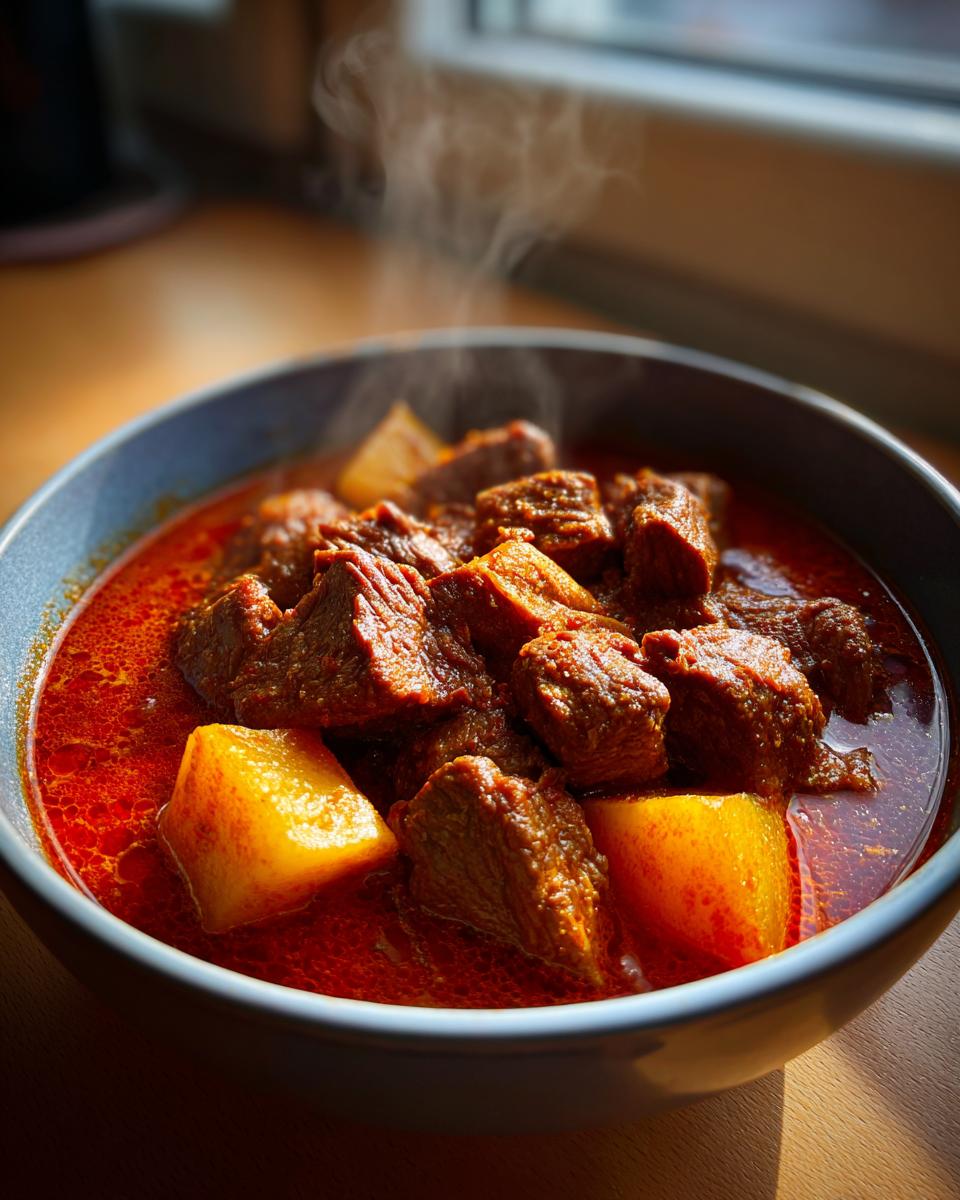
Tips for Quick Weeknight Goulash Adaptation
If you have an Instant Pot or pressure cooker, you can shave a ton of time off this recipe while still getting wonderfully tender meat. This is my go-to when I need that deep flavor but only have an hour available! This is how you transform it into a true Quick Weeknight Goulash.
After browning your meat and blooming your spices on the sauté setting (just like the recipe!), add the rest of your ingredients—broth, tomatoes, peppers—but skip the optional flour slurry until the end. Seal the lid and cook on high pressure for 35 to 40 minutes. Crucially, let the pressure release naturally for at least 15 minutes. Once you release the remaining pressure, then you can stir in your flour slurry if you want that thicker consistency.
Serving Suggestions for Your goulash recipe
The stew is the main event, no doubt, but what you serve alongside it really completes the picture of a perfect Comfort Food Dinner Idea. For the most traditional experience, you must have something to soak up all that incredible, paprika-infused sauce. I’m partial to wide egg noodles—they hold onto the gravy so well!
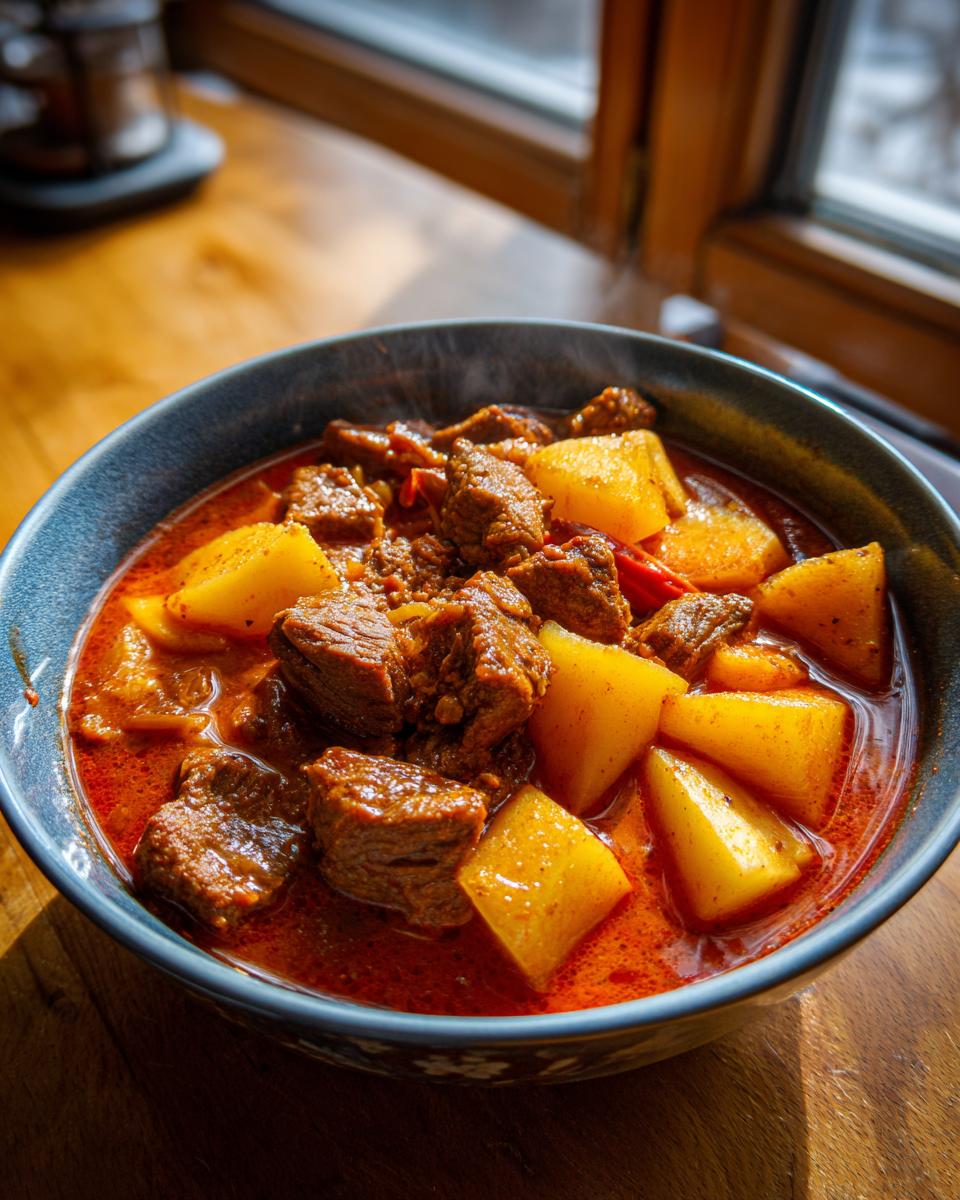
Of course, a hunk of crusty sourdough bread is always welcome at my table. If you want to balance out the richness, a light, tart side really cuts through beautifully. I suggest a simple green salad tossed with something bright. If you need a dressing idea, I have a few easy ones that are totally dependable over here: easy homemade salad dressing recipes. This Classic European Stew is satisfying all on its own, but the right sides make it a feast!
Storage and Reheating Instructions for goulash recipe
The absolute best part about a huge pot of stew? The leftovers! I always tell everyone that this hearty dish tastes even better the second day once all those rich paprika and herb flavors have truly integrated overnight. When you’re storing it, make sure you cool the entire pot down on the counter slightly before transferring it to an airtight container.
Refrigerate leftovers within two hours, and they’ll keep beautifully for up to four days. When it’s time to reheat, I strongly recommend using the stovetop whenever possible. Bring it back up to a bare simmer over medium-low heat, stirring frequently. Microwaving works in a pinch, but you risk drying out the edges of the meat if you don’t stir often enough.
Making This Savory Meat and Potato Stew Ahead of Time
This is truly an excellent make-ahead meal for busy weeks. If you know you won’t get to it in four days, feel free to freeze it! The key here is letting the stew cool down completely first. Pour the cooled-down stew into heavy-duty, freezer-safe bags or containers. If you use bags, lay them flat on a cookie sheet to freeze, which saves space later!
You can keep this savory meat and potato stew frozen for about three months. When you’re ready to eat it, transfer it to the fridge overnight to thaw, and then reheat gently on the stovetop. If you’re still thinking about sides, I have a great recipe for a make-ahead easy bean salad recipe that pairs nicely with the stew’s richness!
Frequently Asked Questions About This goulash recipe
I’ve gathered up the most common things folks ask me when they are nervously approaching this classic dish for the first time. Don’t sweat it; we’ll clear up any confusion so you can command your kitchen!
Can I use different cuts of meat in this goulash recipe?
That’s a question I get all the time! Please, stick to beef chuck roast or good quality stew meat here. Those tougher cuts are built to handle that long simmer time needed for authentic flavor development. If you try to use a leaner cut, like sirloin, it’s just going to dry out and turn tough before the sauce has a chance to meld properly. We want that glorious breakdown!
How do I ensure my goulash has a deep, rich color?
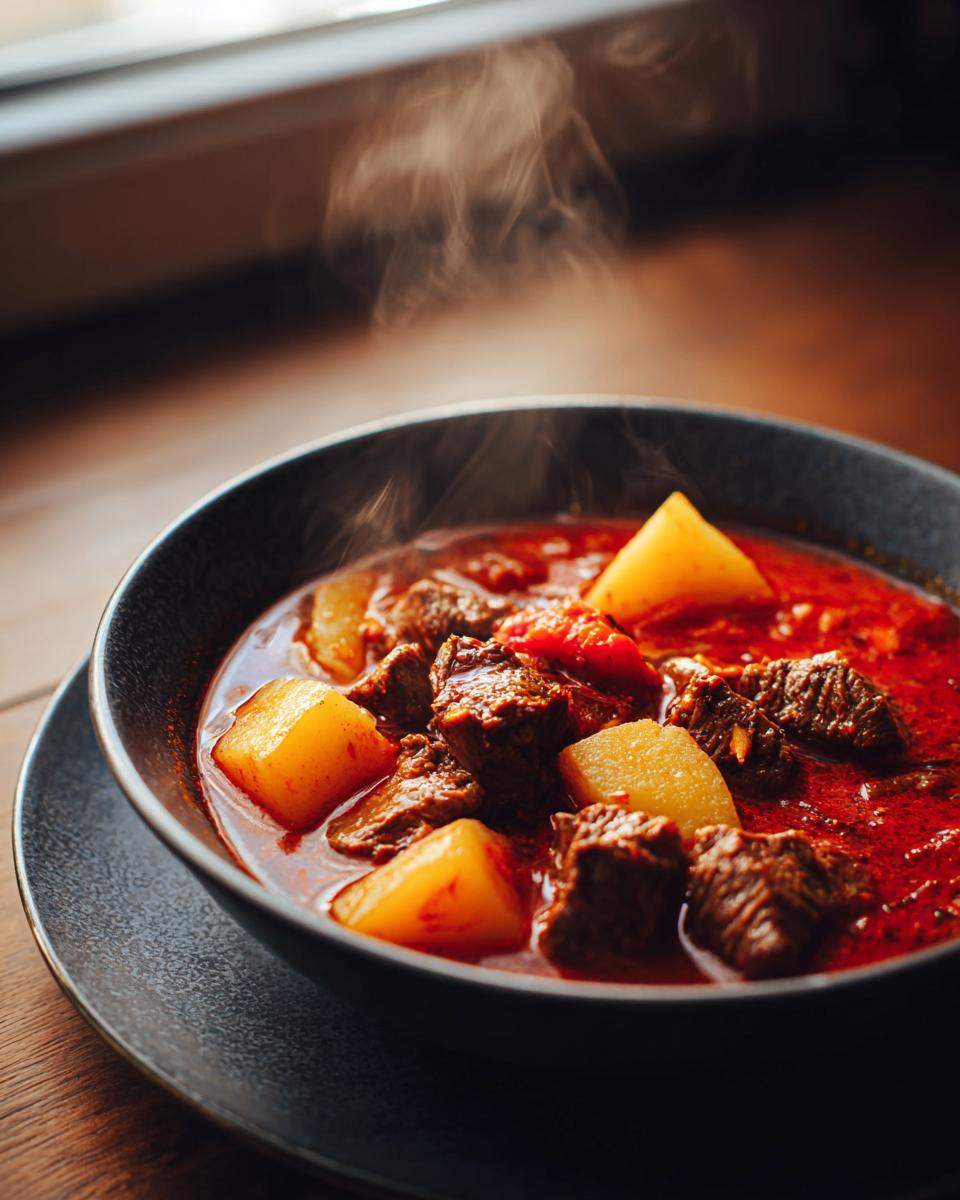
The color is the visual cue that you’ve done the technique right! The deep, vibrant red color that signals this is a fantastic Traditional Goulash Stew comes from two things: making sure your sweet Hungarian paprika is fresh and, most importantly, blooming it correctly. Remember step four? Taking the pot completely off the heat before adding the spice blend ensures it toasts gently in the fat without scorching. Burnt paprika equals brown, bitter stew— we want rich red!
If you’re preparing for a party and need some quick bites beforehand, I have a fantastic page dedicated to easy appetizers and snacks that move super fast!
Understanding Hungarian Cooking Through This goulash recipe
When you dig into this dish, you’re tapping right into the heart of Hungarian Cooking. It’s important to know that what we often call stew back home is much thicker than the original. A true goulash, or *gulyás*, is traditionally soupier—a hearty liquid meal, not a thick casserole base.
We added those optional potatoes to make it a more satisfying one-pot meal for modern tables, but feel free to skip them if you want that liquid closer to the authentic style. It’s about respecting the source while adapting it beautifully. If you want to explore other deep, savory traditions, you should see the depth we achieve in French onion soup amazing flavor secret.
Estimated Nutritional Data for goulash recipe
When we talk about a Tender Beef Stew Recipe this rich and hearty, you know the nutrition facts are going to reflect that savory depth. I pulled the estimates based on the ingredients list above, assuming 6 standard servings. Remember, as Emily Harrison always says, food should be nourishing, but these numbers are just guides—the real joy is in the making!
This preparation leans toward being lower in fat overall because we focus on rendering the chuck properly and skimming any excess, but it’s certainly high in protein. It’s the perfect fuel for a cozy evening!
- Serving Size: 1.5 cups
- Calories: Around 450
- Protein: A whopping 45g!
- Fat: Roughly 20g total fat
- Carbohydrates: About 25g
- Sugar: 8g (mostly natural sugars from onions and broth)
Disclaimer on Nutritional Estimates
Just so we’re clear and completely transparent: these nutrition facts are estimates only! They are calculated based on standard ingredient databases and serving sizes for this specific Traditional Goulash Stew preparation. Your final counts can definitely vary based on the exact brands of beef broth you use, whether you added those optional potatoes, and how much fat you skim off the top during simmering.
PrintAuthentic Hungarian Goulash Stew Recipe

Make a hearty, traditional Hungarian Goulash stew with tender beef and deep paprika flavor. This easy recipe guides you to a perfect comfort food dinner.
- Prep Time: 25 min
- Cook Time: 2 hr 30 min
- Total Time: 2 hr 55 min
- Yield: 6 servings 1x
- Category: Dinner
- Method: Stovetop Simmering
- Cuisine: Hungarian
- Diet: Low Fat
Ingredients
- 3 lbs beef chuck, cut into 1-inch cubes
- 2 tablespoons lard or vegetable oil
- 2 large yellow onions, chopped
- 4 cloves garlic, minced
- 1/4 cup sweet Hungarian paprika (high quality recommended)
- 1 tablespoon hot Hungarian paprika (adjust to taste)
- 1 teaspoon dried marjoram
- 1/2 teaspoon caraway seeds, crushed
- 1 bay leaf
- 1 teaspoon salt
- 1/2 teaspoon black pepper
- 1 large tomato, chopped
- 1 green bell pepper, seeded and chopped
- 4 cups beef broth
- 2 medium potatoes, peeled and cubed (optional, for a thicker stew)
- 1 tablespoon all-purpose flour (optional, for thickening)
Instructions
- Pat the beef cubes dry with paper towels. Season lightly with salt and pepper.
- Heat the lard or oil in a large Dutch oven or heavy-bottomed pot over medium heat. Brown the beef in batches, ensuring not to overcrowd the pot. Remove browned beef and set aside.
- Add the chopped onions to the pot and cook slowly until they are soft and translucent, about 8 to 10 minutes. Do not let them brown.
- Remove the pot from the heat. Stir in the sweet paprika, hot paprika, marjoram, and caraway seeds. Stir constantly for about 30 seconds until fragrant. This step is crucial for flavor development.
- Return the pot to low heat. Add the minced garlic, chopped tomato, and bell pepper. Cook for 2 minutes.
- Return the browned beef to the pot. Add the bay leaf, salt, and pepper. Stir to coat the meat with the spices.
- Pour in enough beef broth to just cover the meat. Bring the mixture to a gentle simmer.
- Cover the pot and reduce the heat to low. Simmer slowly for 1.5 to 2 hours, or until the beef is very tender. Check occasionally and add small amounts of water or broth if the liquid level drops too low.
- If using potatoes, add them during the last 30 minutes of cooking.
- If you prefer a thicker stew, mix the flour with 2 tablespoons of cold water to create a slurry. Stir the slurry into the simmering goulash and cook for 5 more minutes until thickened.
- Remove the bay leaf before serving. Taste and adjust seasoning.
Notes
- For the best flavor, use authentic Hungarian sweet paprika. It provides color and depth without excessive heat.
- If you want to make this in a slow cooker, brown the meat and sauté the onions first, then combine all ingredients (except flour) and cook on low for 6-8 hours.
- Serve this savory meat and potato stew over egg noodles or with crusty bread for dipping.
Nutrition
- Serving Size: 1.5 cups
- Calories: 450
- Sugar: 8
- Sodium: 450
- Fat: 20
- Saturated Fat: 7
- Unsaturated Fat: 13
- Trans Fat: 0
- Carbohydrates: 25
- Fiber: 4
- Protein: 45
- Cholesterol: 110