


If you’ve ever stared into your fridge at the end of a long day, feeling the pressure to put together something both deeply satisfying and genuinely healthy, I totally get it. That’s where Cookery Command was born—Emily Harrison believes the kitchen should be a place of confidence, not complication, even when chasing those perfect, balanced meals. That’s why I am so excited to share this Thai Peanut Sweet Potato buddha bowl with you today. It brings together roasted goodness, crisp textures, and the most unbelievably creamy sauce. When you need quick dressing ideas later, remember we have a great guide on easy, healthy homemade salad dressing recipes, but for now, just focus on this bowl. This recipe proves you don’t need hours to create a vibrant, powerhouse meal.
- Why This Thai Peanut Sweet Potato Buddha Bowl is Your New Favorite
- Gathering Ingredients for Your Thai Peanut Buddha Bowl
- Step-by-Step Instructions to Build Your Perfect Buddha Bowl
- Tips for the Best Thai Peanut Buddha Bowl Success
- Customizing Your Buddha Bowl: Variations and Swaps
- Making Meal Prep Bowls: Storing Your Buddha Bowl Components
- Serving Suggestions for a Complete Balanced Meal Recipe
- Frequently Asked Questions About the Buddha Bowl Recipe
- Nutritional Estimates for This Healthy Bowls Recipe
- Share Your Thai Peanut Sweet Potato Buddha Bowl Creations
Why This Thai Peanut Sweet Potato Buddha Bowl is Your New Favorite
You’re going to keep coming back to this recipe, trust me. It checks every single box for a modern, busy life. We designed this to be the ultimate anchor for your weekly rotation.
- The Flavor Factor: That Thai peanut sauce completely transforms roasted sweet potatoes into something truly craveable.
- Perfect for Meal Prep Bowls: All components hold up beautifully, making complex lunches feel easy.
- Totally Customizable: It easily transforms into one of the best high protein bowls you’ve ever made.
- Quick Assembly: Once components are prepped, you have perfect easy lunch ideas ready in minutes.
We even have a fantastic easy sweet potato muffin recipe if you need another quick way to use up that sweet potato stash later on!
Gathering Ingredients for Your Thai Peanut Buddha Bowl
Okay, this is where we build the foundation for real excitement. Buying ingredients can sometimes feel overwhelming when the list looks long, but I promise this Thai Peanut Sweet Potato buddha bowl is made of distinct, easy-to-source parts. We group them so you can shop efficiently and check things off your list without stress. When you get home, lay everything out—it helps you visualize the finished product!
Don’t worry if you don’t have every single spice; we can tweak things! But for the absolute best flavor, try to stick close to this list. If you want a fantastic creamy peanut sauce recipe to keep on hand for future bowls, check out my guide on quick, creamy peanut sauce recipes.
Components for the Roasted Sweet Potato and Quinoa Base
This is the warm, sturdy part of your bowl. We need one large sweet potato, cubed into roughly one-inch pieces for even roasting. Grab one cup of dry quinoa—make sure you rinse that first! You’ll also need one tablespoon of olive oil, smoked paprika, and salt for seasoning the potatoes before they hit the oven.
Fresh Vegetables and Protein for the Buddha Bowl
Now for the color! We are keeping this vibrant to hit all those necessary nutrients associated with colorful healthy meals. You’ll need two cups of mixed greens—spinach or kale works great. Shred one cup of red cabbage and julienne one large carrot into thin matchsticks. For protein, get one cup of cooked chickpeas, rinsed really well, and if you want an extra boost, half a cup of shelled edamame.
Crafting the Creamy Thai Peanut Sauce for this Buddha Bowl
This sauce is the real MVP! Whisk together half a cup of creamy peanut butter (natural style always blends better) with two tablespoons of rice vinegar and two tablespoons of low-sodium soy sauce or tamari. Add one tablespoon of maple syrup for sweetness, plus the fresh lime juice, some grated ginger, and one minced garlic clove. My biggest tip here? Add the hot water one tablespoon at a time until it’s perfectly pourable. If it’s too thick, it won’t drizzle right over your beautiful buddha bowl! If you want more inspiration for this part of the meal, I always reference great ideas from sauce recipes there.
Step-by-Step Instructions to Build Your Perfect Buddha Bowl
Putting this together might sound like a lot of steps, but honestly, most of the work is hands-off roasting or simple simmering. Think of this as three mini-tasks happening at once. We are going for structured assembly here, not just dumping everything in a pile. I swear, once you see the colors when you layer everything out, you’ll understand why these nourishing bowls are so popular! Don’t forget, for perfectly crispy roasted vegetables, you might want to peep my guide on ultimate crispy roast potatoes because the technique is similar!
Roasting the Sweet Potatoes and Cooking the Quinoa
First things first, let’s get the heat on. You need to preheat your oven to 400°F (200°C). Toss those cubed sweet potatoes with your oil, paprika, and salt, then spread them in a single layer. They need about 20 to 25 minutes to get nice and soft. While those are roasting, start your quinoa. Get one cup of dry quinoa with two cups of broth or water simmering on the stove. Once it boils, dial it back to low, cover it tight, and let it simmer for exactly 15 minutes until all the liquid is gone. Then you just fluff it up with a fork!
Mixing the Flavorful Thai Peanut Sauce
While the oven is busy, whisk up that incredible sauce. Grab a decent-sized bowl and throw in the peanut butter, soy sauce, rice vinegar, maple syrup, lime juice, ginger, and garlic. You need to whisk this persistently until it starts coming together. Now, here is the secret for a drizzle-ready texture: add the hot water slowly, maybe a tablespoon at a time. Keep whisking like you mean it! We want it smooth enough to coat the back of a spoon perfectly, nothing too thick for our lovely buddha bowl.
Assembling Your High Protein Buddha Bowl
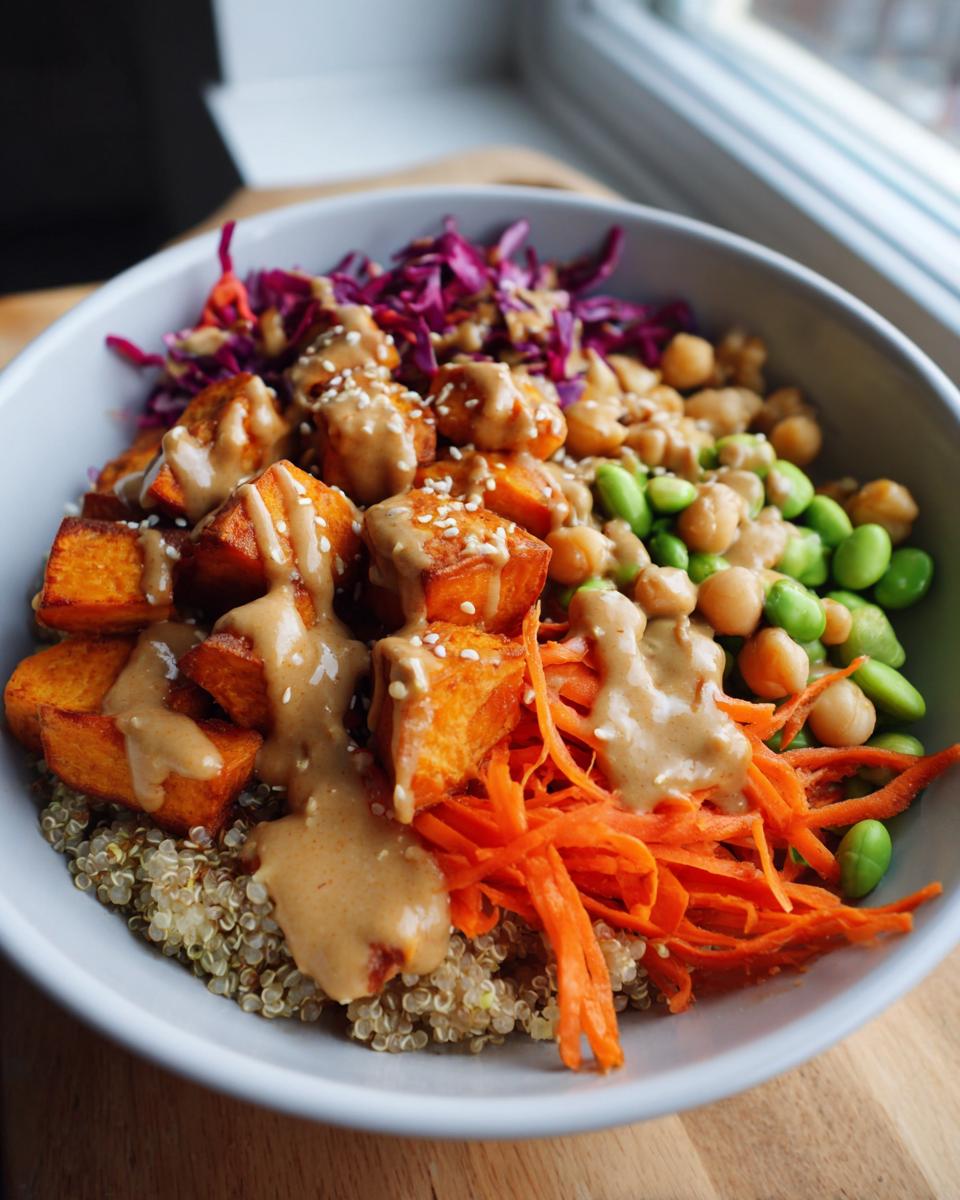
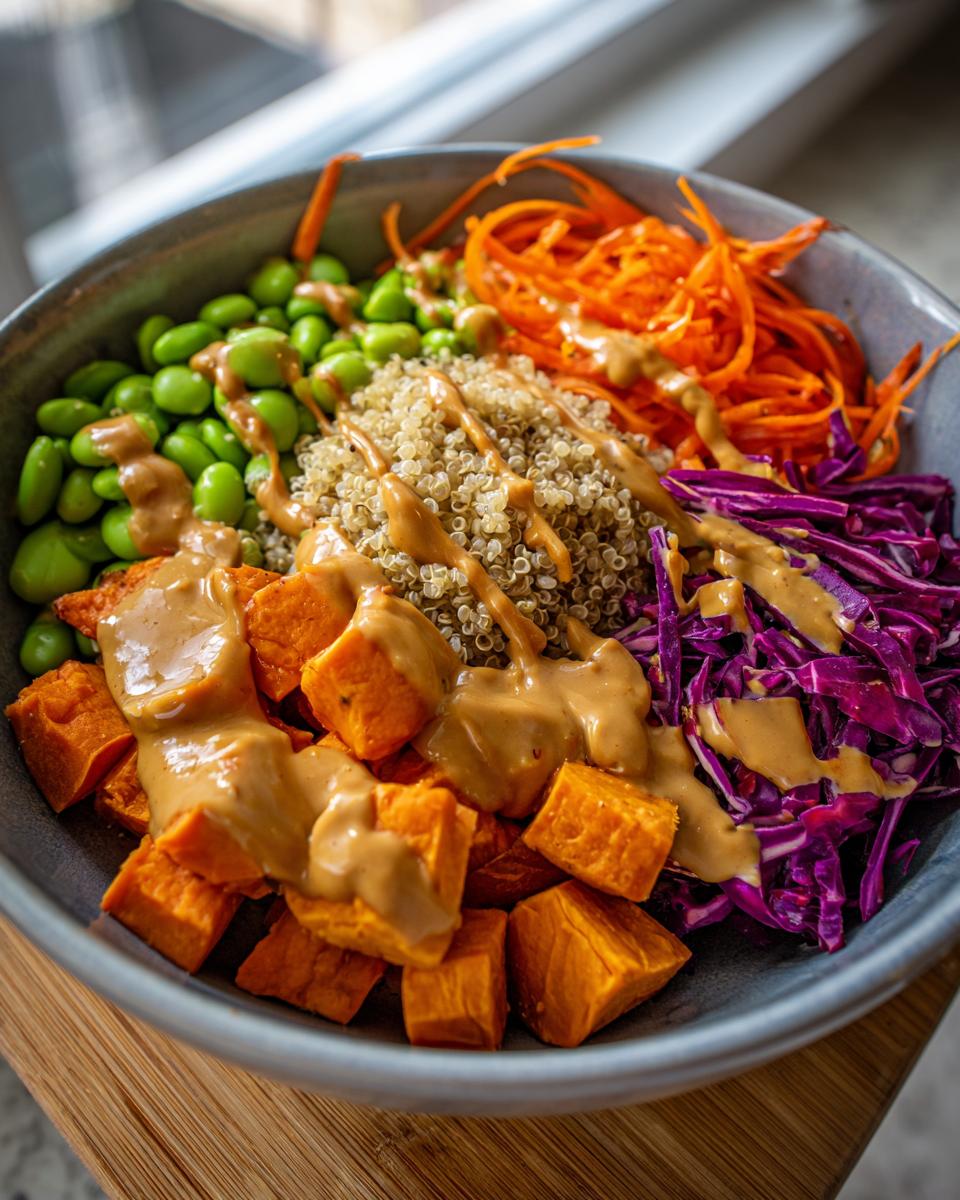
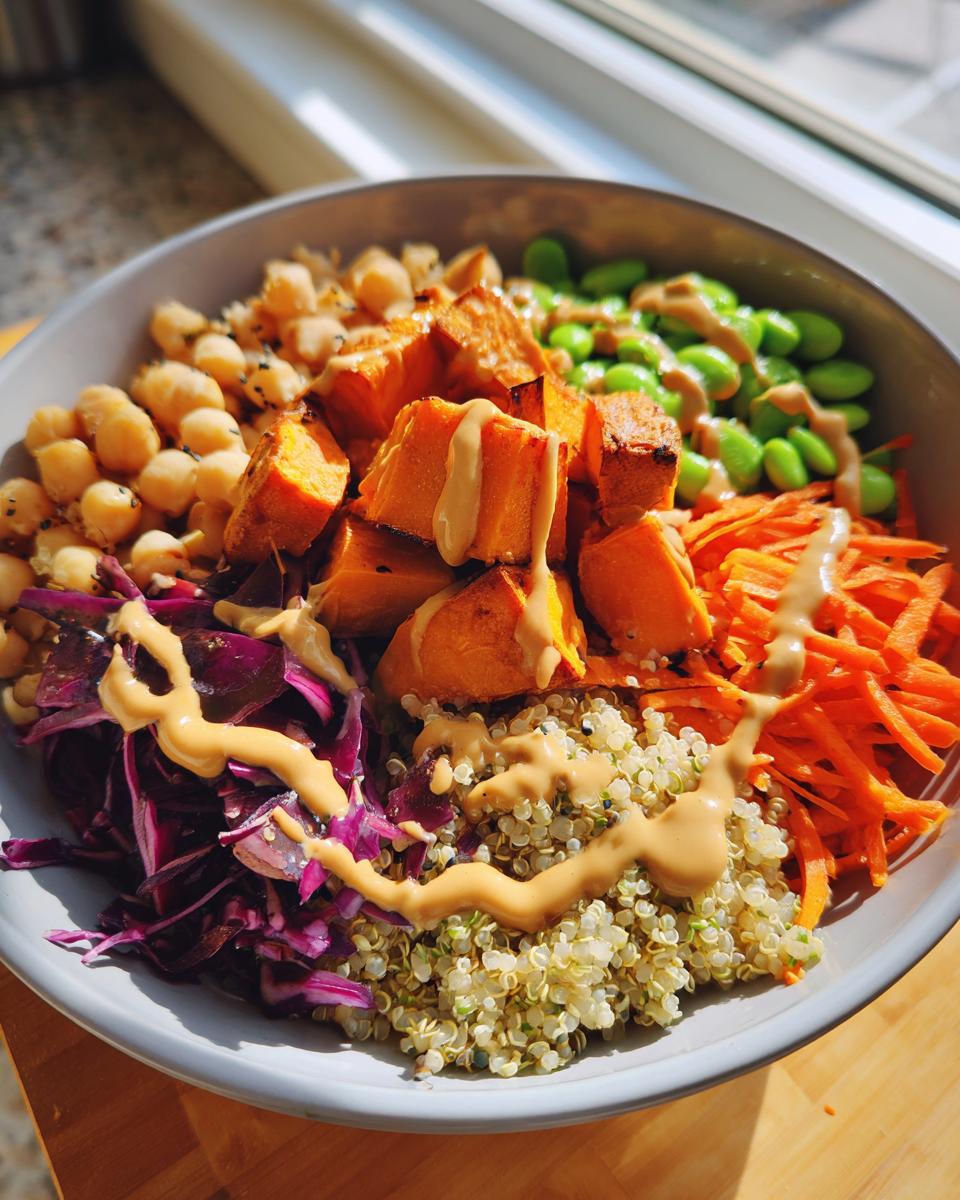
Time to build! Divide your cooked, fluffy quinoa between your four serving bowls—this is your base layer. Now, arrange all the other components next, which makes all the difference in a beautiful buddha bowl. Place the roasted sweet potatoes on one side, then put the chickpeas, greens, shredded cabbage, and carrots in their own little sections. If you’re adding edamame, scatter those in too. Finally, take that gorgeous Thai peanut sauce and drizzle it liberally over everything. Seriously, don’t be shy with the sauce!
Tips for the Best Thai Peanut Buddha Bowl Success
Getting a truly amazing buddha bowl isn’t just about dumping ingredients; it’s about managing textures and maximizing flavor impact. Trust me, a little extra attention here makes all the difference between a decent lunch and something you’ll genuinely look forward to!
First, oven temperature matters way more than you think for those sweet potatoes. Keep that 400°F high so the edges caramelize before the inside gets too mushy. We want contrast! You get soft, sweet potato next to crisp cabbage—that’s what makes it exciting.
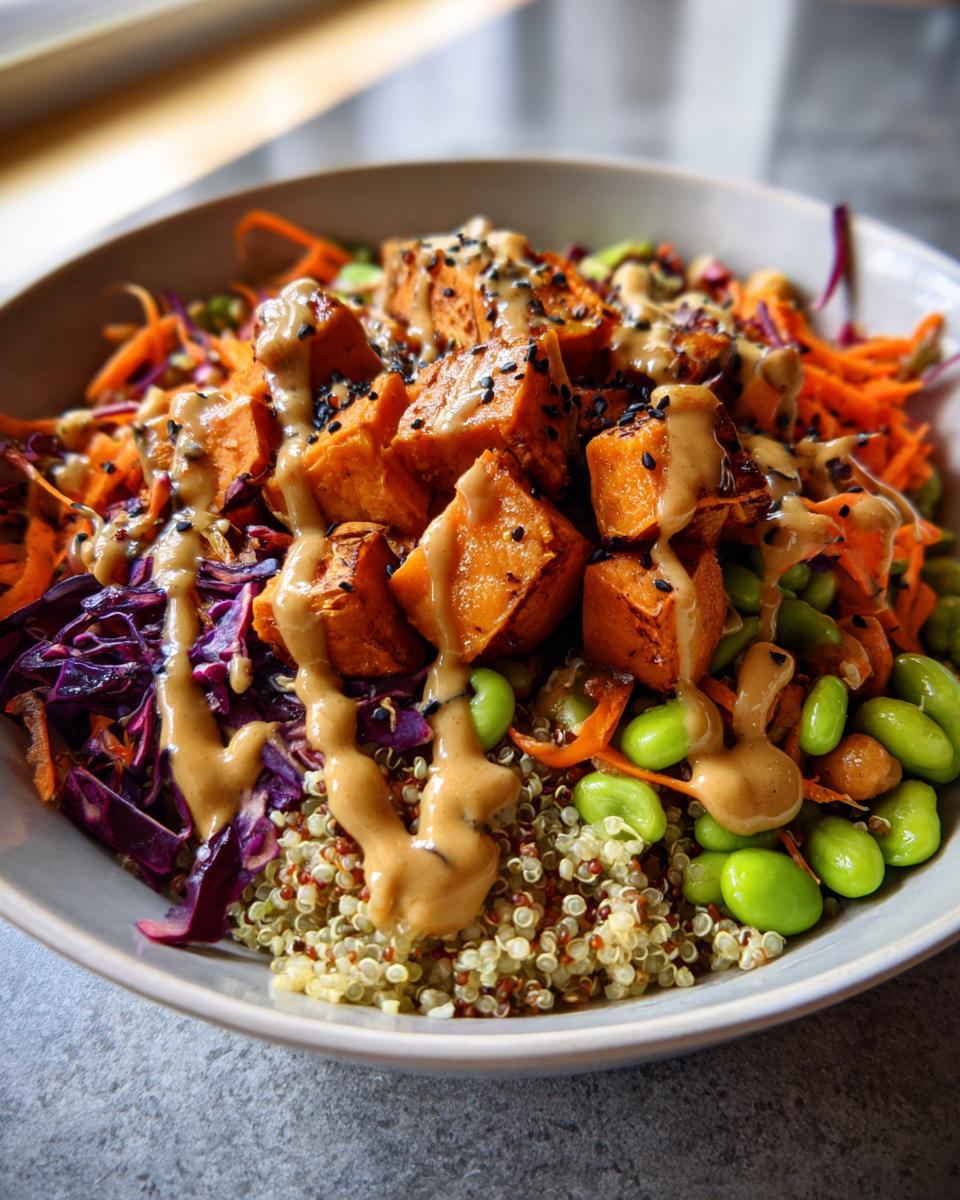
For the sauce, always taste it right before you drizzle. If you want to turn this into a real nourish bowl, try swapping out half the peanut butter for tahini. It cuts the richness slightly and adds lovely depth. If you need other dressing ideas, our guide on easy, healthy homemade salad dressing recipes is a great resource. Balancing sweet, salty, sour, and fatty in that sauce is the key to making this bowl addictive!
Customizing Your Buddha Bowl: Variations and Swaps
One of the very best things about a buddha bowl is that it’s truly built for flexibility. We honor tradition here at Cookery Command, but we always want you to feel empowered to use what you have or what fits your plate right now. Don’t stress if you are out of chickpeas or need to make this work for a different dietary need!
If you’re aiming for truly gluten free bowls, you are already set here, as long as you ensure you use tamari instead of soy sauce in the peanut dressing—simple switch!
For protein swaps, if you are moving away from plant based dinners, feel free to toss in some flaked salmon or diced grilled chicken breast. I actually have an easy noodle soup recipe that uses great marinated beef, and you could adapt that marinade idea for baked tofu cubes if you want a different texture in your buddha bowl!
You can swap the quinoa for brown rice or even farro if you have it on hand. Just remember, these swaps might slightly change your cooking time!
Making Meal Prep Bowls: Storing Your Buddha Bowl Components
Saving time during the week is essential, and this Thai Peanut Sweet Potato buddha bowl is a champion when it comes to batch cooking! The secret to successful meal prep bowls is keeping texture separate until the last minute. Nobody wants soggy carrots or watery quinoa, right?
You absolutely need airtight containers for this. I usually grab four separate containers so I can organize everything perfectly. For great make-ahead options generally, you should look at my guide for easy bean salad recipes too; those hold up amazingly well.
Here is how I portion things out so they taste fresh on Wednesday:
- Starches and Roasts: Store the cooked quinoa and the roasted sweet potatoes mixed together in one container. Since they are sturdier, they handle sitting together just fine once fully cooled.
- The Fresh Stuff: Keep your mixed greens, shredded cabbage, and julienned carrots completely separate in a different container. Don’t add them until you are ready to eat, or they will wilt immediately!
- The Sauce Saver: The amazing peanut sauce goes into a tiny little dressing container. Having a separate vessel for the sauce is vital—if you add it during prep, everything else gets soggy by lunchtime tomorrow.
When you are ready to eat, just pull everything out, combine the base ingredients, and drizzle that glorious sauce on top. Voila! Instant, balanced powerhouse meal.
Serving Suggestions for a Complete Balanced Meal Recipe
We’ve done the heavy lifting creating this amazing main event, but every star needs a great supporting cast! Even though this Thai Peanut Sweet Potato bowl is incredibly satisfying on its own, sometimes you want just a little “extra something” to round out the plate. Plus, when we talk about a complete balanced meal recipe, we’re all about texture and complementary acids!
Since we’re working with those rich, savory, slightly sweet peanut flavors, we want something bright to cut through it all. Think about adding a small side of something sharp or fermented. I find that a tiny dish of tangy, vibrant kimchi on the side works wonders—it hits all those umami notes without competing with the peanut sauce.
If dairy isn’t an issue for you, a small bowl of plain Greek yogurt mixed with just a tiny squeeze of lime works well for cooling the palate, too. Or, if you want more fresh greens on the side, you could pull together a quick authentic Greek salad—just keep the dressing light so it doesn’t clash with the peanut flavor profile of the main meal.
For finishing touches right over the bowl, don’t forget the crunch! A sprinkle of chopped cilantro or mint just before serving brightens everything up immediately. Toasted sesame seeds or even some crushed dry-roasted peanuts will add that last little pop of texture. Trust me, those simple fresh herbs elevate the whole experience!
Frequently Asked Questions About the Buddha Bowl Recipe
I know you might have a few last-minute questions before you dive into making this Thai Peanut Sweet Potato buddha bowl. It’s totally fair! We want to make sure you feel 100% confident when you start assembling these beautiful plates. Don’t hesitate to customize, but here are the answers to the most common things people ask me about these amazing vegetarian grain bowls.
Can I use brown rice or another grain instead of quinoa?
Absolutely, you can! Quinoa is fantastic because it cooks fast—check out my guide on quinoa bowl recipes for more ideas—but brown rice works perfectly well as a base for these healthy bowls. Just be prepared that brown rice usually takes closer to 40 minutes to cook, so you’ll need to adjust your timing. Millet or farro are also delicious options if you want to switch things up from your usual routine!
How long does the peanut sauce last if I make an extra batch?
This creamy Thai peanut dipping sauce is incredibly stable! Stored in an airtight container in the fridge, it should stay good for a solid week, maybe even 10 days if you are careful not to dip anything messy into the main jar. It thickens up quite a bit when cold, though. Don’t panic! Just whisk in a few teaspoons of warm water or a splash of lime juice when you pull it out before drizzling it over your next batch of meal prep bowls.
What exactly makes a bowl qualify as a ‘Buddha Bowl’?
That’s a great question! People sometimes use power bowls and nourish bowls interchangeably, but generally, a true buddha bowl implies balance and visual appeal. The golden rule I follow is similar to a 25/25/50 ratio: a base of wholesome grains (like quinoa), a good portion of protein (chickpeas here!), and the rest filled with colorful, raw, or roasted vegetables. It’s supposed to be a colorful, aesthetically pleasing, and nutritionally complete meal all in one dish!
Can I make this a quick gluten-free bowls recipe easily?
Yes, and we already built it that way! As long as you use tamari instead of standard soy sauce in the peanut dressing—tamari is naturally gluten-free—this recipe is already geared toward gluten-free bowls. All the core components like sweet potatoes, quinoa, and chickpeas are naturally gluten-free, making this an excellent option if you’re looking for safe, flavorful food.
Nutritional Estimates for This Healthy Bowls Recipe
I think it’s really important to know what you’re putting into your body, especially when we are aiming for those super healthy, filling meals like this one. Cookery Command always tests recipes rigorously, but please remember that these numbers are just estimates based on standard ingredient measurements as listed in the recipe. If you swap out peanut butter for almond butter, or use a different type of grain, those numbers will shift slightly!
But based on the Thai Peanut Sweet Potato veggie loaded bowl as written, here is what one full serving provides you:
- Calories: Approximately 550 kcal
- Protein: Around 22 grams—a fantastic boost for keeping you satisfied!
- Total Fat: Roughly 28 grams (mostly healthy unsaturated fats from the peanut butter).
- Carbohydrates: About 60 grams, which includes all that great fiber.
- Fiber: A healthy 11 grams, which really helps keep things moving smoothly.
See? That’s why this works so well as a balanced meal recipe. You get a huge hit of fiber and protein alongside complex carbs to keep you energized without that mid-afternoon crash. It’s wholesome comfort food that actually nourishes you!
Share Your Thai Peanut Sweet Potato Buddha Bowl Creations
And there you have it! You’ve created a vibrant, balanced meal that’s ready to take on the week or satisfy a sudden craving. But my journey in the kitchen—and the entire mission of Cookery Command—is about sharing the joy of cooking, so I really want to see what you’ve made!
Once you’ve assembled your delicious Thai Peanut Sweet Potato buddha bowl, please do me a favor: come right back here and tell me how it went! Did you swap the chickpeas for baked tofu? Perhaps you added some fresh avocado on top for extra creaminess? Drop all your thoughts, tips, and success stories in the comments below.
If you truly loved this recipe and it became a staple for your easy dinner recipes rotation, please consider leaving it a five-star rating. Those stars really help other folks find reliable recipes they can trust in their own kitchens. Pictures are always welcome, too! Feel free to tag us on social media when you share your beautifully assembled, colorful healthy meals so we can cheer you on.
If you ever need to reach out directly with a question about technique or need help troubleshooting a dish, please don’t hesitate to use our contact page. Happy cooking, and enjoy every single colorful bite of that fantastic buddha bowl!
PrintThai Peanut Sweet Potato Buddha Bowl
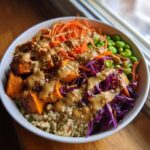
Assemble this flavorful, plant-based Buddha bowl featuring roasted sweet potatoes, crisp vegetables, and a creamy Thai peanut sauce. This recipe is excellent for meal prep and provides a balanced, satisfying lunch or dinner.
- Prep Time: 15 min
- Cook Time: 25 min
- Total Time: 40 min
- Yield: 4 servings 1x
- Category: Dinner
- Method: Roasting and Assembly
- Cuisine: Fusion
- Diet: Vegan
Ingredients
- 1 large sweet potato, cubed
- 1 tablespoon olive oil
- 1 teaspoon smoked paprika
- 1/2 teaspoon salt
- 1 cup dry quinoa
- 2 cups water or vegetable broth
- 1 cup cooked chickpeas, rinsed and drained
- 2 cups mixed greens (spinach or kale)
- 1 cup shredded red cabbage
- 1 large carrot, julienned
- 1/2 cup shelled edamame (optional protein boost)
- For the Thai Peanut Sauce:
- 1/2 cup creamy peanut butter
- 1/4 cup low-sodium soy sauce or tamari
- 2 tablespoons rice vinegar
- 1 tablespoon maple syrup or honey
- 1 tablespoon fresh lime juice
- 1 teaspoon grated fresh ginger
- 1 clove garlic, minced
- 2–4 tablespoons hot water (to thin)
Instructions
- Preheat your oven to 400°F (200°C). Toss the cubed sweet potato with olive oil, smoked paprika, and salt. Spread on a baking sheet and roast for 20-25 minutes, turning halfway, until tender and slightly caramelized.
- While the sweet potatoes roast, cook the quinoa. Combine quinoa and water or broth in a saucepan. Bring to a boil, then reduce heat to low, cover, and simmer for 15 minutes, or until all liquid is absorbed. Fluff with a fork.
- Prepare the Thai Peanut Sauce. In a small bowl, whisk together peanut butter, soy sauce, rice vinegar, maple syrup, lime juice, ginger, and garlic. Add hot water, one tablespoon at a time, until the sauce reaches a smooth, pourable consistency.
- Assemble your Buddha bowls. Divide the cooked quinoa among four bowls to form the base.
- Arrange the roasted sweet potatoes, chickpeas, mixed greens, red cabbage, carrots, and edamame (if using) neatly over the quinoa in separate sections.
- Drizzle each bowl generously with the Thai Peanut Sauce before serving.
Notes
- For extra protein, substitute the chickpeas with baked tofu cubes or grilled chicken breast if you are not following a strictly plant-based diet.
- Prepare the sauce and roast the sweet potatoes ahead of time to make assembly quick for weeknight healthy meals.
- If you prefer a tangier sauce, increase the lime juice slightly.
Nutrition
- Serving Size: 1 bowl
- Calories: 550
- Sugar: 12
- Sodium: 580
- Fat: 28
- Saturated Fat: 4
- Unsaturated Fat: 24
- Trans Fat: 0
- Carbohydrates: 60
- Fiber: 11
- Protein: 22
- Cholesterol: 0